

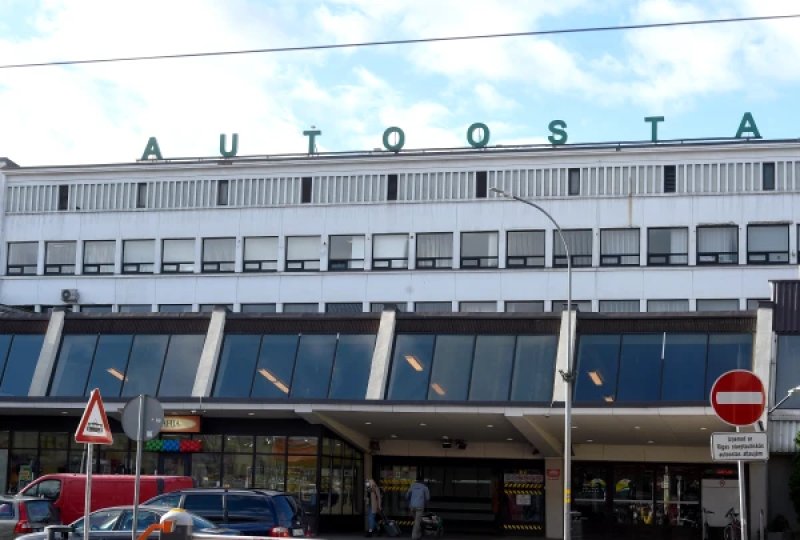
The Riga International Bus Station officially comes under the control of a private investor. In the summer, the government approved the deal for the sale of the municipality-owned share package behind closed doors, completing the privatization process that began back in the late last century. This was reported by the program [TV3](https://tv3.lv/zinas/latvija/neka-personiga/ar-valdibas-piekrisanu-rigas-autoosta-nonak-privatas-rokas/) "Nothing Personal." The subsidiary of Rīgas satiksme — Rīgas acs — sold its 50% stake for €3.82 million. The buyer is Rivaro Holding, owned by the current shareholder of the bus station, Sergey Serdyukov, and his son Vasily. Along with the share package, the new owner gained control over the enterprise, which has more than €3 million in its accounts. According to the chairwoman of the board of Rīgas satiksme, Gineta Innusa, the enterprise did not consider the bus station as a core asset. > "Rīgas satiksme would never invest in such territories, as it would bring no benefit to the enterprise itself," she stated. The funds obtained from the sale are planned to be directed towards the purchase of new buses. ## Why the sale was approved by the government The Riga Bus Station is classified as a critical infrastructure facility, so the change of ownership required the approval of the Cabinet of Ministers after a security services review. As explained by the State Secretary of the Ministry of Economics, Raivis Bremšmits, such a procedure is provided for by the National Security Law. Minister of Transport, Rihards Kozlovskis, also noted that the state could not allow a strategic facility to come under the control of a company with capital from an unfriendly country. According to the program, four potential investors expressed interest in purchasing, but final offers were received only from two. Unofficially, it is reported that the second contender was a Lithuanian company with capital of Russian origin. ## The new owner promises investments The purchase is financed through a loan from Signet banka. The total amount of borrowed funds is €8.8 million. In addition to paying for the deal, about €5 million is planned to be directed towards the modernization of the bus station. Board member of Rivaro Holding, Vasily Serdyukov, stated that the project is designed for the long term. > "We see the Riga International Bus Station as an important part of the capital's transport hub along with Rail Baltica, the city’s public transport, the Central Market, and the historic center. Our goal is to gradually enhance its convenience, efficiency, and long-term value." The company has also begun to buy back shares from minority shareholders and aims to concentrate about 90% of the enterprise's capital. At the same time, Rivaro Holding assures that it does not view the purchase as preparation for subsequent resale. ## What will change for passengers Currently, the Riga International Bus Station remains one of the largest transport hubs in the country. Every day, it serves about 450 regional and 60 international bus routes, with approximately 6 million passengers passing through it each year. In the near future, its operation will not change. The chairwoman of the bus station, Vaira Gromule, reported that the new owner confirmed the preservation of the current functions of the facility. However, long-term changes are virtually inevitable. Even today, the operation of the bus station is complicated by the construction of Rail Baltica, which has reduced the area of the complex. Additional uncertainty is created by the upcoming reform of Riga's public transport, which involves the creation of transfer hubs on the outskirts of the city. One of the options being considered involves relocating the final stops of some suburban buses outside the city center. According to Gineta Innusa, this will affect the operation of the bus station, but does not mean its closure. > "The bus station will remain, but its transformation is undoubtedly inevitable." In turn, the executive director of Riga, Janis Lange, emphasized that the existing territorial planning of the historic center provides for the use of this area specifically as a bus station, so there are currently no grounds to fear a change in its designation. The sale concluded a long history of privatization, but the further development of the bus station will now depend on the investments of the new owner and the large-scale restructuring of Riga's transport system.
