

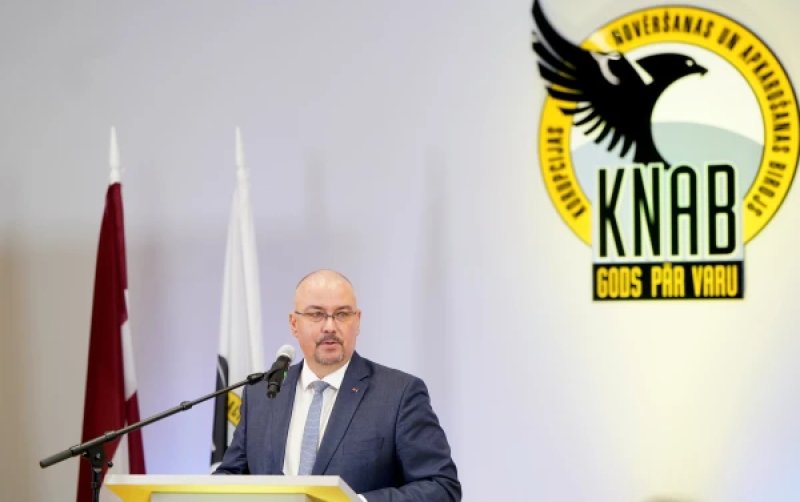
The head of the Corruption Prevention and Combating Bureau (KNAB), Jānis Straume, has left his position a year before the end of his second term. The decision came as a surprise: he officially explained his departure by stating that he was retiring and claimed that there was no political pressure on him. > "I have served the state for 32 years. Now it is time to turn the page. There was no political or other pressure," said Straume, adding that he does not intend to engage in politics and does not plan to give interviews. However, specialists studying anti-corruption issues believe that the reasons for discussing the work of KNAB go far beyond personnel changes. In their opinion, the bureau's activities have noticeably lost effectiveness in recent years, despite increased funding and staff expansion. Straume has headed KNAB for nine years. At that time, there were expectations that the former security service employee would lead the agency out of a prolonged internal crisis. The former head himself names the stabilization of the team as the main achievement, but researchers note that there have been virtually no high-profile results in investigating high-level corruption in recent years. Associate researcher Liga Stafecka believes that Straume's second term was extremely weak. > "The last years, the last term of his office were extremely, extremely dull," she stated. According to the expert, the parliament and government did not set specific tasks for KNAB and did not require an assessment of the results achieved, despite the fact that the agency received additional resources. During Straume's tenure, the salary fund for the bureau's employees nearly doubled — from over 3.3 million euros in 2019 to 6.5 million euros in 2025. The number of staff positions increased from 152 to 174, and all employees, including communication specialists, received the right to a departmental pension. At the same time, a number of the most high-profile criminal cases ended without convictions. Investigations into the so-called "builders' case," the procurement of transport for Rīgas satiksme, and other major corruption episodes were discontinued. Criticism concerns not only criminal investigations. Experts believe that KNAB does not effectively monitor the financing of political parties and the conduct of election campaigning. The chairman of the parliamentary commission on defense, internal affairs, and corruption prevention, Raimonds Bergmanis, when asked about the bureau's work, suggested: "Maybe there really isn't that much corruption?" His colleague on the commission, Ainars Latkovskis, holds a different position. According to him, it is precisely KNAB that should initiate investigations into large state and municipal procurements, but the most high-profile cases in recent years have been initiated by the European Prosecutor's Office. This assessment is shared by the Attorney General, Armīns Meisters. He stated that he is not satisfied with the results of investigations in the field of combating corruption and noted that in a number of high-profile cases, signs of corruption have not yet received proper legal assessment. Against this backdrop, opinions on further actions diverged. Prime Minister Andris Kulbergs believes that the competition for the position of the new head should be announced as soon as possible so that the bureau does not remain without a permanent leader. At the same time, Liga Stafecka suggests waiting for the results of a large-scale audit of KNAB's effectiveness, which is being conducted by the State Audit Office for the first time in the agency's history. Auditors intend to assess not only the use of budget funds but also the entire cycle of criminal investigations — from receiving information about a possible crime to court proceedings. At the same time, the State Chancellery has commissioned the University of Latvia to conduct an academic study of KNAB's activities, which should also assess the oversight system of the bureau and changes in public trust towards it. It is expected that the conclusions of both audits will be presented in early next spring. Today, the main intrigue remains not only the question of the new head of KNAB but also how effectively the agency has fulfilled its key task — combating corruption.
