

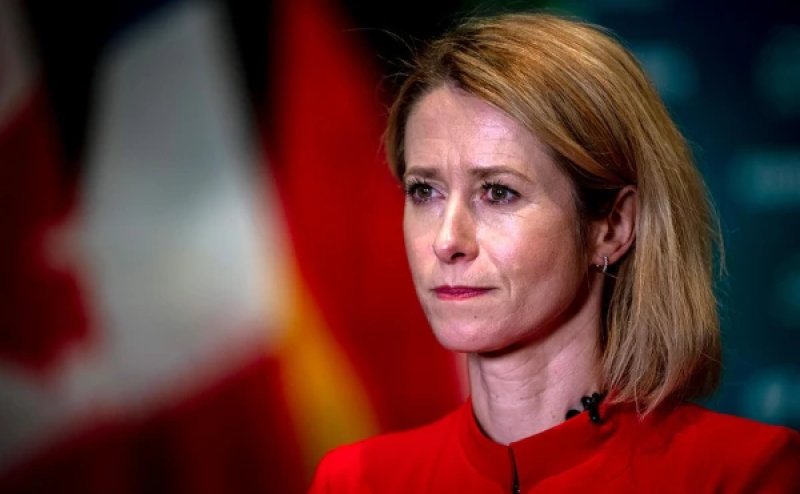
According to the EU's High Representative for Foreign Affairs and Security Policy, Kaia Kallas, the European Union plans to significantly expand sanctions against Russia in the coming months. "This autumn, I will present the broadest sanctions list since the beginning of the war. If adopted, the number of Russian individuals, companies, and organizations under sanctions will immediately increase by one third," Kallas stated in an interview with the German newspaper Die Welt, published on Monday, August 17. Currently, the EU sanctions lists against Russia include nearly 3,000 individuals and legal entities, according to the European Commission. Kallas emphasized the need to "increase pressure on Russia until it ends the war. ## ## Hope for Renewed Alignment with the US on Sanctions At the same time, the head of European diplomacy expressed hope that the positions of the US and Europe on sanctions would align again. According to her, this hope is fueled by the Senate's passage of a sanctions bill prepared by Senator Lindsey Graham, who unexpectedly passed away after a visit to Kyiv. Kallas also described the 21st package of sanctions against Russia, introduced since the beginning of the full-scale war against Ukraine, as a success. "Russia has paid a high price for EU sanctions; they have already cost the Russian military machine more than one trillion euros," she said. ## "Systematic Terror" by Russia Against Ukraine The head of European diplomacy also pointed to the "systematic terror" that Russia is carrying out against its neighboring country. The Russian army "is not winning on the battlefield and therefore increasingly directs its missiles against the Ukrainian civilian population and infrastructure," aiming to "make Ukrainian cities uninhabitable." In the interview, Kallas also recalled data from the UN Human Rights Mission, which indicated that July was the deadliest month for the civilian population of Ukraine since May 2022. Moreover, in the Black Sea, Russia is attacking grain-laden vessels, thereby jeopardizing global food supplies. Ukraine's allies must not allow Russian President Vladimir Putin, who unleashed the war, to succeed, emphasized the head of the EU's foreign policy department. ## ## Europe Must Respond to Hybrid Threats For its part, Europe is facing growing hybrid threats, and most acts of sabotage, espionage, and cyberattacks are linked to Moscow, she further noted. Kallas pointed to the incident involving a drone at Leipzig Airport and the violation of Polish and Romanian airspace by Russian missiles and drones. "They are testing our resolve and challenging our defense. Such incidents are unacceptable and demonstrate Moscow's growing malignancy. If we respond too weakly, we will see even more such incidents," she is convinced. According to the politician, Germany's plans to reform its intelligence services are crucial for a more effective response to hybrid threats.
