

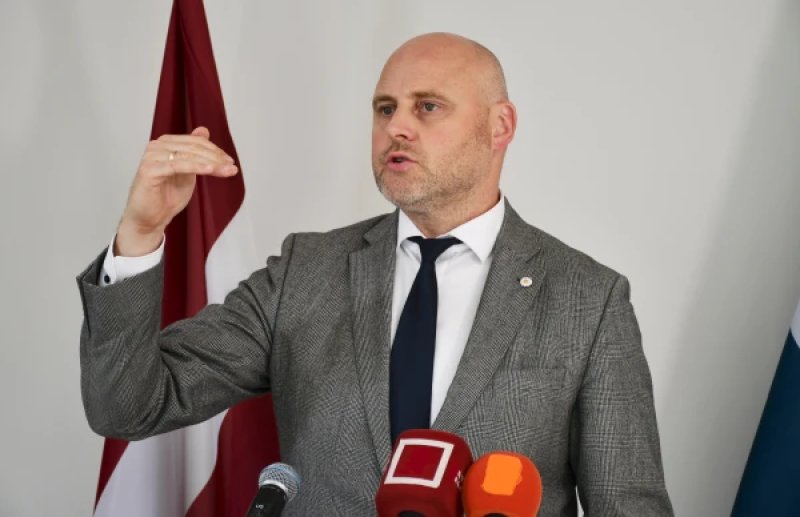
A couple of days later, the Prime Minister elaborated in detail on what he wants. The politician explained to the LETA agency that deterring threats at the Latvian border benefits all of Europe. "If the border holds, Bavaria and other regions of Europe become safer, regardless of whether Bavaria pays for it. When the benefits are shared and the costs are geographically concentrated, the result is always the same — insufficient investment," the Prime Minister believes. He added that the "market price of Latvian debt" is higher precisely because Latvia is located at the border. As a result, the state pays a higher interest rate for investments that reduce risks for the entire European Union (EU). Kulbergs considers this a fundamental market flaw and the reason why the situation cannot be resolved solely through loans. According to Kulbergs, every euro invested in fortifications at the border provides a greater deterrent effect than a euro spent 1500 kilometers to the west of that border. "If Europe wants to achieve maximum security for every euro spent, it needs to acquire it where the border lies. This is not a request for solidarity. This is a proposal for the most effective allocation of capital," the politician stated. He mentioned that a large portion of the funds spent returns to the West in the form of arms and equipment purchases in Germany, France, Sweden, the Netherlands, and Spain. Latvia only takes on debt, while Western European states receive orders, Kulbergs noted. He emphasized that this is not about transferring money to Latvia, but about financing a common European public good. According to Kulbergs, 7 billion euros is approximately 0.4% of the proposed European budget of nearly 2 trillion euros and 5.3% of the 131 billion euros allocated for defense and space. Converted to 449 million Europeans, this amounts to 2.23 euros per person per year. > "One cup of coffee once a year," the Prime Minister calculated. At the same time, the same amount per capita for a resident of Latvia is about 540 euros per year. The Latvian politician noted that currently, the country is effectively financing part of its defense investments through increased debt or, essentially, at the expense of Latvian schools, hospitals, and pensions. He emphasized that Latvia's national debt is already projected to grow from 47% of GDP in 2025 to over 54% by the end of this decade. > "Europe can pay for its border in euros. Or Latvia will pay with people," Kulbergs stated. Kulbergs also emphasized: if the EU cannot find 2.23 euros per resident per year, then the question is no longer whether Latvia can afford to spend 5% of GDP on defense. The question, he said, is what Article 42, paragraph 7 of the Treaty on European Union practically means. This paragraph stipulates that if an EU member state becomes a victim of armed aggression on its territory, the other member states are obliged to provide it with assistance and support by all means available to them.
