

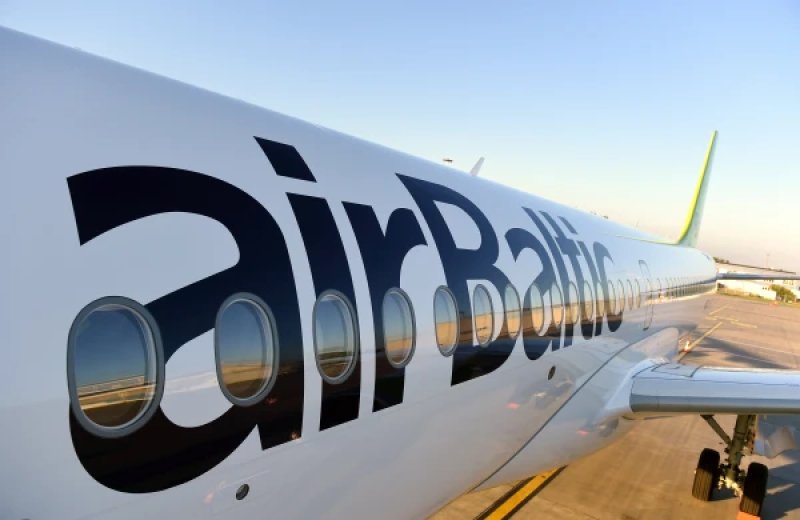
The Saeima recognized as urgent and conceptually supported the draft law that will allow the state to participate in the financial stabilization of the national airline airBaltic if necessary. The document grants the Cabinet of Ministers the right to purchase interim financing bonds of the airline for up to 30 million euros. The state will be able to participate in the transaction on the same terms as private investors; however, the final decision on the purchase of bonds will be made separately by the government. Another key measure provides for the conversion of part of the company's debt obligations into its equity capital. This concerns state-owned bonds worth 50 million euros, as well as the remaining part of the state loan — more than 18 million euros. In fact, the state will be able to exchange part of its claims against the airline for additional shares in its capital. This mechanism is expected to reduce the carrier's debt burden and facilitate financial restructuring. The draft law also provides for the extension of the repayment period of the state loan of 30 million euros until the end of the current year. At the same time, the company has already repaid part of the loan and paid interest totaling 12.9 million euros. In addition, the government will have to report to the Budget Commission of the Saeima on the progress of the financial stabilization measures at least once a quarter. The need for additional support arose against the backdrop of a large-scale restructuring of the company. Previously, bondholders agreed not to make cash payments on the next two interest payments and to include them in the principal debt. The airline is also temporarily exempt from the requirement to maintain a minimum liquidity level until November 2026. At the same time, the issue of attracting 225 million euros in interim financing remains open. This issue was not discussed at the last bondholders' meeting as it was not included in the agenda. According to the new business plan, airBaltic expects to attract up to 225 million euros in borrowed funds and an additional 100 million euros in equity. At the same time, the company plans to reduce its fleet of Airbus A220-300 aircraft from 54 to 36 by the end of 2026, focusing on the most profitable routes. Despite the ongoing restructuring, in 2025 the airline increased passenger traffic to 5.2 million people, and its losses decreased almost threefold to 44.3 million euros. However, preparations for an initial public offering (IPO) have been suspended, and this option is no longer considered as a source of financing for 2026.
