

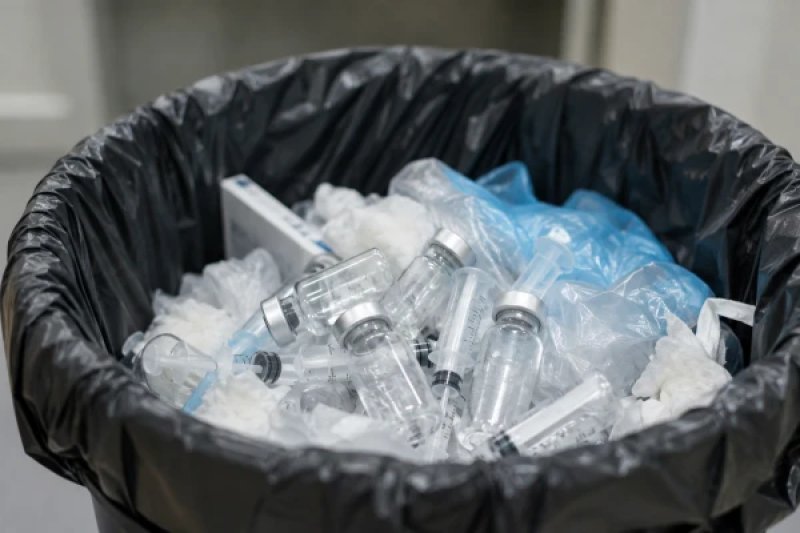
Responsible authorities are still counting the number of affected medical practices and lost vaccine doses. The Center for Disease Prevention and Control reports that some vaccination facilities have already discarded spoiled medications, but the process has only just begun, so the total amount of losses cannot yet be determined. For example, in Varakļāni, the power supply was interrupted on Saturday evening for more than a day. In the practice of family doctor Sandra Gritane, on Sunday morning the temperature in the refrigerator with vaccines reached **+12 degrees**, although the medications should be stored at a temperature between **+2 and +6 degrees**. As a result, the practice had to dispose of about **40 vaccines** intended for children, adults, and pregnant women. The Latvian Association of Family Doctors acknowledges that medical practices are not prepared for power outages of this scale. If a similar situation occurs again, significantly more medical institutions could be affected. Some of the vaccines stored in practices are funded by the state, but some medications are purchased by doctors at their own expense. Deputy Director of the State Agency of Medicines Sergey Akulich told LTV that losses from self-purchased vaccines are not compensated. Medical institutions must ensure the necessary storage conditions themselves, including considering the possibility of backup power supply. In turn, family doctors note that installing generators or other backup power sources is not feasible in every practice. Therefore, after the storm, they believe it is necessary to find a systemic solution that will protect vaccine supplies during prolonged power outages. Last weekend, Latvia was hit by a very strong storm that caused extensive damage. At one point, more than a quarter of a million customers were left without electricity. Now the consequences of the disaster are being counted not only by energy companies and owners of damaged property: power outages have also resulted in losses for the healthcare system, and the issue of backup power for medical practices has become particularly relevant.
