

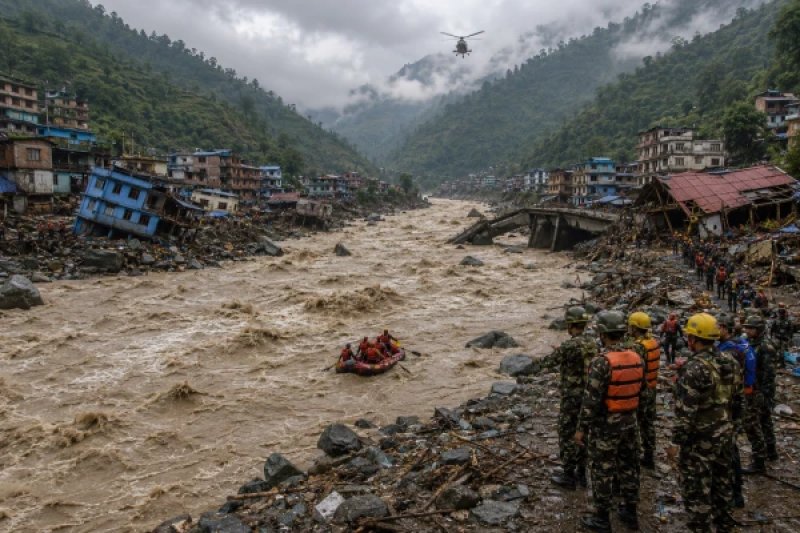
Authorities emphasize that the list has been compiled based on information from travel companies and is still being verified. Therefore, it cannot be considered confirmation of the death or disappearance of individuals: many tourists may remain out of contact due to the destruction of infrastructure. Among the foreigners are at least 105 Indian citizens, 17 Malaysian citizens, 12 British citizens, four South African citizens, and three American citizens. There are also citizens of Australia and the Netherlands on the lists, while the nationality of many missing persons is still being established. Additionally, there are reports of 37 non-resident Indians. According to Nepalese law enforcement, 16 people have died as a result of the flooding. Authorities do not rule out that the death toll could significantly increase. The flooding occurred on the morning of August 26 on the Bhote-Koshi River. The flow of water came from Tibet and particularly affected the areas of Timure, Rasuwagadhi, and Syabrubesi. As a result, residential houses, markets, roads, bridges, police posts, and hydropower facilities were destroyed. In some areas, communication and electricity supply have also been disrupted. Among the missing are members of the Nepalese security forces who were serving in the border area. Search and rescue operations involve units of the army, police, and aviation. Nepal has also requested assistance from India and China. The exact cause of the sudden rise in water levels has not yet been established. Initially, it was assumed that the flooding could have been caused by the breach of a glacial lake or a landslide on the Tibetan side. However, specialists from the International Centre for Integrated Mountain Development consider another scenario to be more likely: an ice-rock avalanche blocked a tributary of the Bhote-Koshi, after which the resulting natural dam broke. The Nepal Tourism Board has urged relatives of the missing not to jump to premature conclusions, as the restoration of communication and verification of lists may change preliminary data.
