

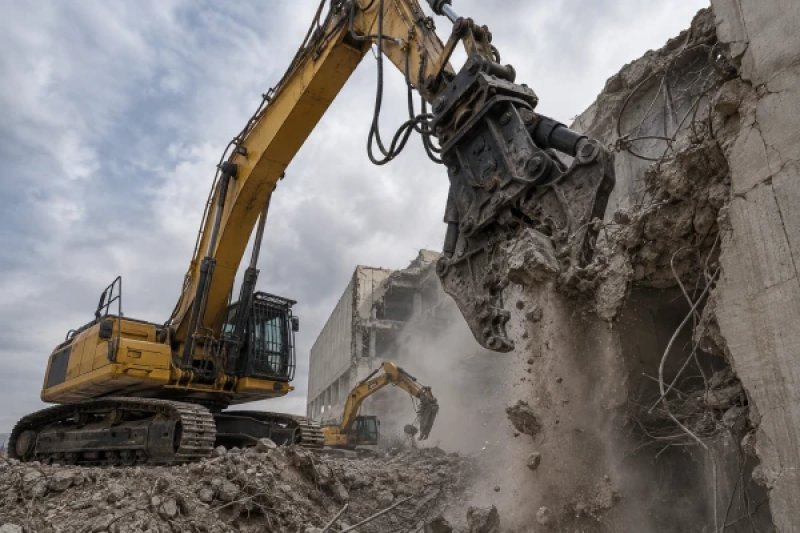
On August 27, the Lithuanian Court of Appeals ruled that the illegally constructed object cannot be sold and, therefore, cannot be transferred to the authorities of Vilnius. The decision of the Vilnius District Court from July 8 remained unchanged. "The court of first instance, having established the factual circumstances of the case, properly examined and evaluated the collected evidence, correctly applied the substantive legal norms governing bankruptcy procedures, and the conclusions of the court of first instance correspond to the totality of the collected evidence," the Court of Appeals stated. At that time, the House of Moscow argued that the courts had previously recognized this institution as the developer of the building, and therefore the object should be put in order — sold or written off — within the framework of the bankruptcy procedure. Moreover, the House of Moscow notes that it is in a state of insolvency and, therefore, cannot demolish the building: "The court previously granted the Construction Inspectorate the right to independently demolish the building and recover costs from the company. The transfer of ownership to the municipality does not cancel this mechanism and does not prevent the Construction Inspectorate from carrying out demolition work." At the same time, the Vilnius authorities claimed that the creditors' decision was unfounded and that the municipality was not obliged to take the building under its control, as the institution could not dispose of it by law. According to the decision of the Court of Appeals, the law prohibits the disposal of unauthorized construction objects. "As long as the consequences of unauthorized construction (reconstruction) are not eliminated (...), a decision on the realization of the rights and obligations of the owner in the legalization of the reconstruction of the structure (its parts) cannot be made," the court ruling states. In the opinion of the Court of Appeals, the Vilnius Regional Court rightly recognized the creditors' decision as invalid. The decision to write off the House of Moscow was made by the creditors — the State Tax Inspectorate and the Social Insurance Fund — on May 6 in accordance with the Law on Bankruptcy of Legal Entities, which provides for the transfer of the written-off building to the administration of the municipality in which it is located. The BNS agency reported that negotiations for a settlement agreement were initiated by the Ministry of the Environment. The goal is to agree that the Construction Inspectorate will no longer be responsible for the demolition of the building, and this responsibility will be transferred to another party — a company that will carry out the work at its own expense or with other private funds, with a proposal that the municipality could also take on the responsibility. The head of the Construction Inspectorate, Albertas Stanislovaitis, told BNS at the end of June that the municipal dispute regarding the confiscation of the House of Moscow complicates the possibility of reaching a settlement, but does not stop the process. He also noted that it is still unclear when the content of the contract can be agreed upon. Former Minister Kastytis Žuromskas told BNS in mid-May that a settlement agreement would be signed between the Construction Inspectorate and the company that would take on the responsibility for the demolition of the building at its own expense. After the settlement agreement is signed, it still needs to be approved in court. Viktoria Šinkūnienė, a representative of the Construction Inspectorate, informed BNS that, according to the law, the dispute can be settled by a settlement agreement at any stage of the process. The mayor of the capital, Valdas Benkunskas, previously stated that an agreement could be reached in the fall. The idea of building the 'House of Moscow' near the center of the capital and a new business and residential complex on the site of the former Žalgiris Stadium has been in development since 2004. In December 2016, the Vilnius City District Court declared invalid the construction permit issued by the municipality and ordered the developer, the state organization 'Moscow Cultural and Business Center - House of Moscow', to obtain a new permit and reconstruct the building accordingly. If the institution does not do this, it is obliged to demolish the building, and if this obligation is not fulfilled, in 2022 the Construction Inspectorate was authorized to organize the demolition...
