

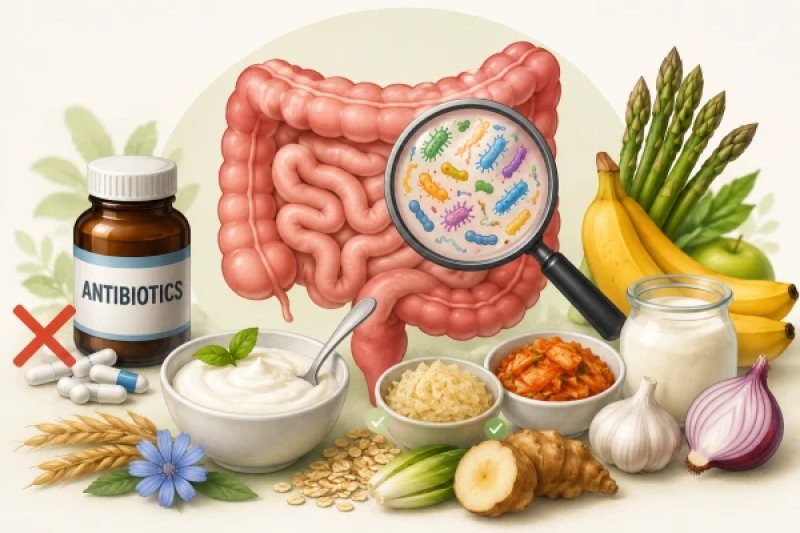
After a course of antibiotics, many immediately start taking probiotics or indulge in kefir and yogurt. However, restoring the microbiota is a more complex and lengthy process. Antibiotics suppress bacteria sensitive to the drug without distinguishing between "beneficial" and "harmful". As a result, the diversity of the gut microbiota decreases, and after taking broad-spectrum drugs, changes can persist for several months, while certain microorganisms may take significantly longer to recover. The freed-up space can be occupied by conditionally pathogenic microorganisms. Therefore, after treatment, it is important to create conditions for the gradual restoration of normal microbiota. ### Do You Need Probiotics Probiotics contain live microorganisms, but they should not be chosen solely based on the maximum number of bacteria on the packaging. More important are the specific strains and the presence of evidence of their effectiveness. If a probiotic is taken during a course of antibiotics, its intake should be spaced out from the antibiotic by at least two to three hours, as recommended in the material. ### What to "Feed" Beneficial Bacteria Prebiotics are of great importance — dietary components that serve as a nutrient medium for gut bacteria. Their sources can include **chicory, Jerusalem artichoke, onions, garlic, asparagus, bananas, oats, and barley**. However, it is not advisable to sharply increase the amount of fiber after antibiotics: a sensitive gut may react with bloating and discomfort. Fermented products can be a beneficial addition — **kefir, natural unsweetened yogurt, sauerkraut, kimchi, miso**. But one should not rely solely on them: a diverse diet is especially important for the microbiota. ### What to Temporarily Exclude After antibiotics, the author of the material advises refraining from alcohol for at least two weeks, as well as limiting refined sugar and ultra-processed foods. The diet should contain enough protein and fiber. Good sources of protein include eggs, fish, and poultry. It is also important to drink enough water. However, it is not recommended to perform a "gut cleanse" using enemas or hydrocolon therapy after antibiotics — such procedures can further damage the mucosa. ### When to See a Doctor If diarrhea persists for more than three to four days after antibiotics, if there are abdominal pains, mucus or blood in the stool, unexplained weight loss, or a persistent fever, it is necessary to consult a doctor. The main thing is not to try to restore the gut in just a few days. The microbiota needs time, and the foundation of recovery should be **a diverse, balanced diet, a gradual increase in fiber intake, and reasonable consumption of fermented products**.
