

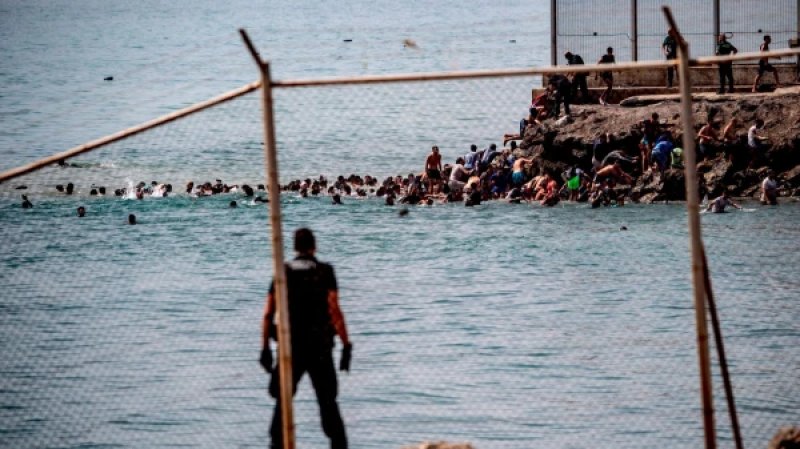
The head of the Spanish government noted that the reasons for the crisis in Ceuta are still under investigation, but pointed to mystifications and disinformation on social media following the Supreme Court's decision regarding the alleged ban on the return of migrants who arrive in the country by swimming. Sánchez explained that the decision was "distorted" and spread on social media through disinformation fake accounts, as well as by criminal groups. The official linked this wave of disinformation to Russia, Israel, and an "ultra-right international organization that always uses migration not only to attack Spain but also Europe, as well as to divide it." "Russian and Israeli networks spread these fakes and attacked the Spanish government and Europeans on such a sensitive issue as illegal migration, which divides and polarizes many European societies," the Spanish Prime Minister noted. "In any case, this type of fake news was used and spread through social media. That is what we know," Sánchez added. As reported by **bb.lv**, more than 70,000 migrants reached the Spanish enclave of Ceuta at the end of July. They arrived by swimming or on foot from neighboring Morocco during a chaotic influx that provoked new tensions regarding migration policy within the European Union. Something similar is happening in Latvia. Last year, border guards prevented 12,046 attempts to illegally cross the Latvian-Belarusian border.
