

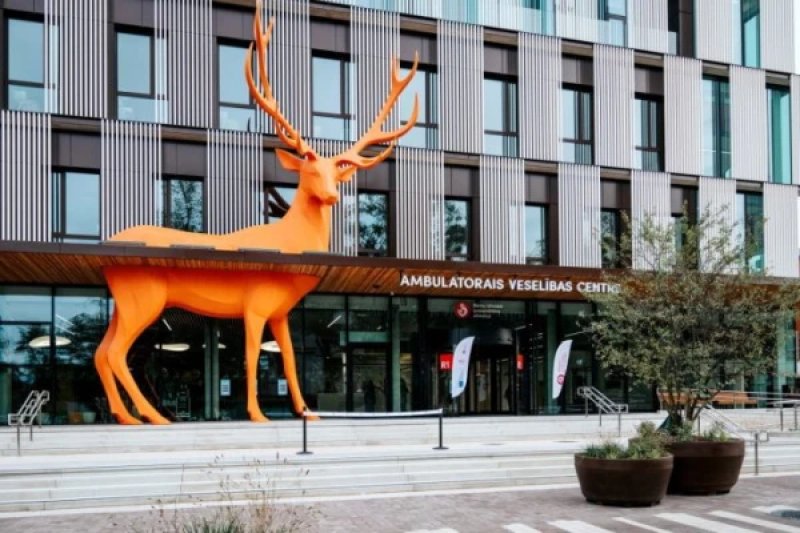
At the Children's Hospital, the demand for outpatient and emergency care is growing. In the first seven months of this year, the Children's Clinical University Hospital provided 255,207 outpatient visits — 3,700, or 1.47%, more than in the same period last year. In turn, the Emergency Medical Care Center registered 42,856 visits — almost 1,000, or 2.31%, more than in the same period a year earlier. As reported to the LETA agency by the hospital's representative Liva Segliņa, the increase in outpatient services indicates that more and more children are receiving necessary care without hospitalization. At the same time, the number of visits to the Emergency Medical Care Center has increased, while the number of patients transported by the Emergency Medical Service has decreased. This allows us to conclude that parents are increasingly choosing to go to the Children's Hospital's Emergency Medical Care Center themselves to receive assistance from specialists in case of acute illness or other health issues. The number of hospitalizations in the hospital has slightly decreased, totaling 8,400 in the first seven months of this year. Meanwhile, the average length of stay in the hospital has decreased from 4.59 to 4.48 days. The direct access pediatrician service has also proven to be in demand, allowing families to quickly receive a specialist's consultation when their family doctor is unavailable. In the first seven months, there were 12,471 in-person consultations with pediatricians for acute cases, and another 3,000 families took advantage of remote consultations. The high demand for the hospital's services is also evidenced by the volume of work at the Customer Service Center. Over seven months, the center received 161,515 incoming calls — 5,000 more than in the same period last year. At the same time, the number of canceled visits has decreased, and the filling of available appointment slots has improved. The hospital explains this by the implementation of digital solutions and artificial intelligence tools used to manage the flow of appointment bookings. The chairman of the board of the Children's Hospital, Valts Abols, notes that compared to the previous year, there has been an increase in demand for outpatient and emergency services, as well as improvements in patient experience and the efficiency of treatment processes. According to him, the state funding and European Union funds attracted in recent years have allowed for the quicker implementation of solutions that have already become part of everyday healthcare. For example, the provision and maintenance of long-term vascular access in pediatrics has become a state-funded service, and digital solutions for prescribing medications are used in everyday treatment processes. As part of the hospital's infrastructure improvement, a Neuropsychological Health Center has been opened, the operating block has been modernized, a simulation training center has been created, and departments have been renovated. The hospital has also approved a new strategy that, according to Abols, defines the hospital's responsibility for the child healthcare system in Latvia. To improve the quality of medical care for children and patient safety, the hospital's Methodological Guidance Center has developed and digitized several interactive tools for clinical decision-making. These are available to both medical professionals and parents. Currently, an action algorithm for elevated temperatures in children, a diagnostic and action algorithm for Attention Deficit Hyperactivity Disorder, and a Pediatric Intensive Care Guide for critical situations are available. Several more clinical algorithms are under development to ensure a unified, evidence-based approach to providing medical care for children throughout Latvia. Data collected by the hospital from patient surveys show that patients and their families have rated the care received, communication, and staff attitude higher. In the first six months of this year, the inpatient patient readiness index to recommend the hospital reached 81.95 points — five points higher than in the same period last year, when the figure was 76.95 points. To help families prepare for their visit and navigate the hospital grounds, a digital "Patient Guide" has been created. It contains information on how to get to the hospital, what documents to bring, how to prepare for examinations, and what to know about staying in the hospital. The guide is freely available from any smart device on the Children's Hospital website. Statistics from the Children's Hospital show a gradual shift in the workload towards outpatient and emergency care without hospitalization. At the same time, the hospital is expanding digital services and implementing artificial intelligence tools, aiming to make access to medical care faster and more convenient for families.
