

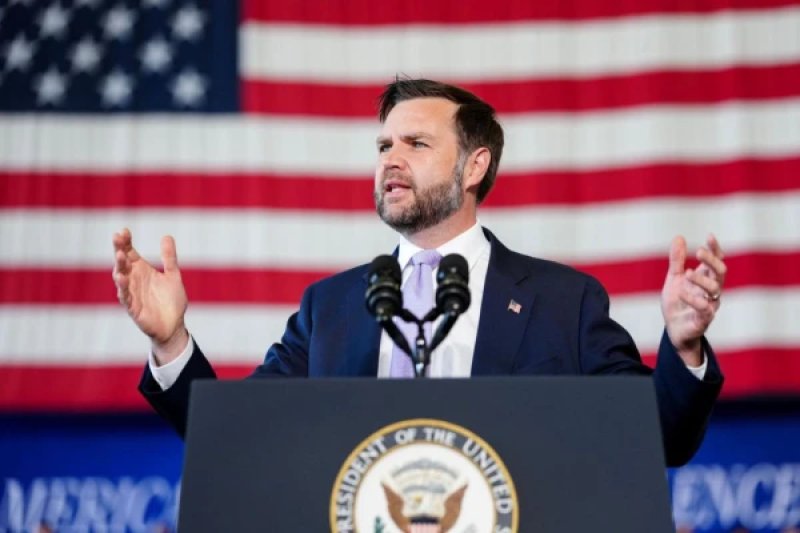
Amid another exchange of strikes between the U.S. and Iran, Vice President J.D. Vance on Monday did not deny concerns about ammunition shortages and the potential reduction of the American military's ability to respond to threats in other parts of the world, [reports](https://www.ynetnews.com/article/sj8wevm00ze#autoplay) Ynetnews. At the same time, Vance attributed the situation to the previous administration of Joe Biden. According to him, President Donald Trump is currently working to address these issues. "I believe that today the United States is in as strong a position as possible, and under the president's leadership, we will only become stronger," Vance stated. He noted that under the Biden administration, the U.S. armed forces faced insufficient investments and a lack of resources. "Obviously, this concerns us, but it concerns us due to years of underfunding the armed forces. And this is precisely one of the issues that the President of the United States is trying to fix," the vice president added. ### Pentagon Warned Trump About a month ago, The New York Times reported that Trump was considering launching a new "massive strike" against Iran. However, senior Pentagon officials allegedly warned the president against such a move due to a shortage of interceptors and concerns that American forces would struggle to cope with a large-scale response from Tehran. On Sunday, The Washington Post also reported that senior American military officials had warned Defense Secretary Pete Hegseth: large-scale operations against Iran cannot be sustained for a long time. According to their assessment, further concentration of American forces in the Middle East could limit the U.S. military's ability to counter threats in other regions of the world and even negatively impact the ability to protect the United States itself. ### Trump Released Video of Bombing the Island Vance was also asked about a video posted by Trump on Truth Social, created with the help of artificial intelligence, showing an aerial bombing of an island. The president accompanied the clip with a statement that the island of Hark was "being blown to pieces." "You know, the president likes to mix up his social media posts a bit. He sent a signal to the Iranians," Vance commented. Meanwhile, Iranian representatives attempted to downplay the significance of the nighttime exchange of strikes with the U.S., while continuing their harsh rhetoric towards Washington. Iranian Deputy Foreign Minister Kazem Garibabadi stated that any actions threatening the territorial integrity of the country, regardless of their scale, would meet with "the most decisive response." The commander of the air defense of the joint staff "Khatam al-Anbia" Ali Reza Elhami also warned that in the event of any actions against Iran, the adversary would receive a response. ### Tehran Also Talks About Negotiations Iranian President Masoud Pezeshkian, who was on a visit to Kyrgyzstan, stated that the American side had not fulfilled its obligations. He emphasized that Tehran continues to seek agreements and mutual understanding. According to Pezeshkian, the continuation of the war does not serve the interests of either Iran, the region, or humanity as a whole, and existing problems should be resolved through dialogue and cooperation. The U.S., for its part, warns of harsh sanctions against countries that continue to maintain economic ties with Iran. ### Exchange of Strikes Continues On Sunday evening, the United States struck missile launchers of the Islamic Revolutionary Guard Corps on the island of Larak. A few hours later, American officials reported an Iranian attack on forces stationed in Jordan. In the morning, Iranian military officials stated that they attacked a U.S. Air Force base in the United Arab Emirates using drones. A senior American official reported that the U.S. strike was carried out after IRGC forces were observed preparing to launch missiles with naval mines towards the Strait of Hormuz. According to him, American forces have completed clearing international shipping lanes of mines, continue to closely monitor the situation, and are ready to ensure the free movement of commercial vessels through the Strait of Hormuz.
