

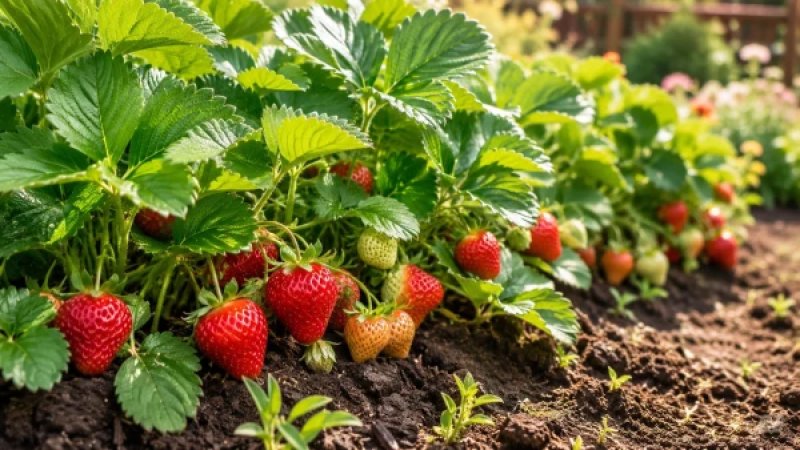
### Tidy Up the Bed After harvesting the last berries, it is essential to inspect the plantings. Remove dry, damaged, and visibly diseased leaves, as well as plant debris around the bushes. If there are signs of disease or pest damage on the leaves, they should not be left in the bed. You also need to deal with the runners. If you do not plan to propagate strawberries, it is better to cut off the excess runners: the plant uses nutrients for their development. Only the strongest rosettes that are intended to be used as planting material should be left. However, it is not advisable to cut healthy foliage back to the ground completely. It is sufficient to remove old and damaged leaves while trying not to disturb the young foliage and the heart of the bush. ### Water Even After Harvesting Berries After fruiting, strawberries do not stop developing. Therefore, during dry weather, the bed needs to be periodically watered. The soil should remain moderately moist. Excessive watering is just as undesirable as drying out: constant over-saturation creates unfavorable conditions for the root system. ### Fertilize, but Be Cautious with Nitrogen After harvesting, plants require nutrients for recovery and preparation for wintering. The fertilizer should be chosen based on the soil condition and the characteristics of the cultivated variety. However, it is not advisable to get too carried away with nitrogen fertilizers as autumn approaches. Nitrogen stimulates the active formation of green mass, while before the onset of cold weather, plants need to gradually prepare for the dormant period. ### Do Not Let the Bed Become Overgrown Another common problem is excessively dense plantings. When bushes lack space, they compete for light, moisture, and nutrients, and poor ventilation can contribute to the development of diseases. Penn State Extension specialists recommend conducting a so-called renovation of the beds of common garden strawberries after fruiting: thinning the plants and narrowing overly wide rows. The original material provides the following guidelines: the row width should be about **15–30 cm**, and about **8–10 cm** should be left between strong plants. ### Do Not Rush to Cover Strawberries Before winter, the root system of strawberries can be protected with a layer of organic mulch. However, it is not advisable to cover the plants too early. Strawberries benefit from first undergoing natural adaptation to lower temperatures. As noted by Penn State Extension specialists, premature mulching can hinder the normal hardening of the plants. Therefore, it is better to cover the beds after stable cold weather sets in, rather than at the first cool nights. **And most importantly:** after harvesting, strawberries need careful care — sanitary cleaning, removal of unnecessary runners, moderate watering, reasonable fertilization, and timely preparation for the cold. Such care will help the plants successfully survive the winter and prepare for the new season.
