

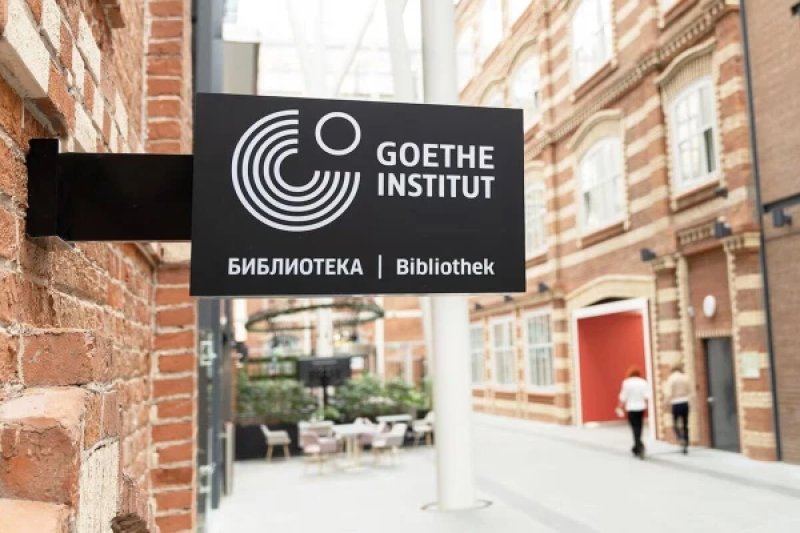
On September 3, Russian Foreign Minister Sergey Lavrov announced the decision to close the Goethe Institute. According to Reuters and the German television channel ARD, this concerns centers in Moscow, St. Petersburg, and Yekaterinburg. Lavrov stated that this is a response to Germany's decision to cease the activities of the Russian House in Berlin. According to him, the German side should have understood that such a step would mean the end of its cultural presence in Russia. The Goethe Institute promotes the German language and culture abroad. The first institute in Russia began operating in Moscow in 1992. In recent years, it remained one of the few major German cultural organizations that continued to operate in the country. ## The Cause Was an Incident with a Drone The sharp deterioration in relations occurred after events on August 4 at Leipzig/Halle Airport. As previously reported by bb.lv, a drone with explosives was discovered near a Ukrainian cargo plane, which specialists subsequently defused. On September 1, the German government stated that the results of the police investigation and intelligence data indicate Russia's responsibility for the alleged attempt at an attack. German Interior Minister Alexander Dobrindt stated that those involved in the incident, according to the German side, acted on behalf of Russian state structures. German Foreign Minister Johann Wadephul noted that Berlin views the incident not as an isolated episode but as part of a broader campaign of hybrid operations by Russia in Europe. As a retaliatory measure, Germany decided to close the Russian consulate general in Bonn and terminate the agreement that allowed the Russian House to operate in Berlin. Russia categorically rejected the accusations. The Russian embassy in Germany called them unfounded and stated that Berlin's actions represent a serious escalation of Russian-German relations. President Vladimir Putin also accused Germany of fabricating evidence. ## Cultural Ties Continue to Diminish The closure of the Goethe Institute is yet another testament to the near-total dismantling of institutional ties between Russia and Germany. Reuters reminds that a similar situation had already arisen in relations between Moscow and the United Kingdom: in 2018, Russian authorities ordered the cessation of the British Council's activities in the country. Now a similar fate awaits German cultural centers that have been operating in Russia for more than three decades. The diplomatic conflict, which began after the drone incident in Leipzig, has extended far beyond security issues. Germany is closing Russian diplomatic and cultural institutions, while Moscow responds by shutting down the Goethe Institute. As a result, one of the consequences of the political standoff is the further reduction of cultural and social contacts between the two countries.
