

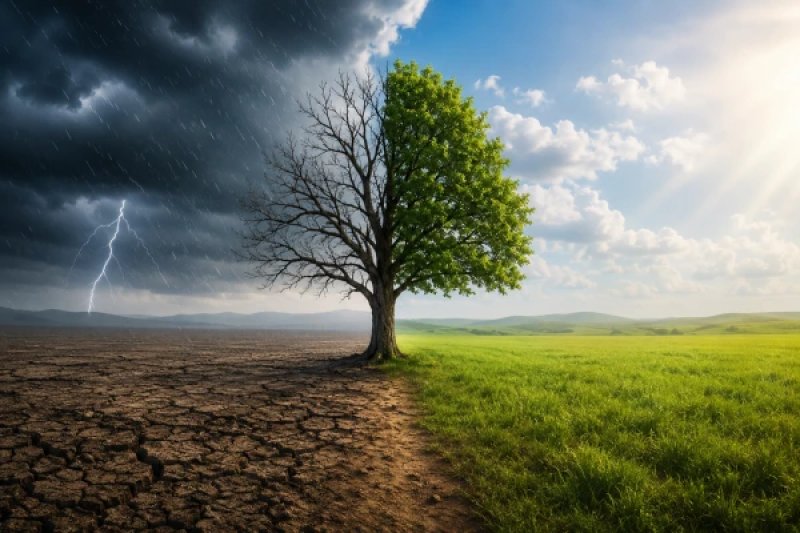
According to the WMO, the likelihood that El Niño will persist at least until February 2027 is approaching 100%. The organization notes that such a definitive forecast has not been seen in its bulletins on El Niño and La Niña before. The further intensification of the phenomenon is due to exceptionally high water temperatures in the tropical part of the Pacific Ocean. It is expected that the current El Niño will reach its peak by **the end of 2026**, but its impact on weather and climate may still be felt in 2027. A very strong El Niño can significantly alter the usual distribution of temperature and precipitation in different parts of the planet. In some regions, the likelihood of droughts and extreme heat increases, while in others, heavy rains and flooding are more likely. At the same time, the WMO specifically emphasizes that the strength of El Niño itself does not automatically determine how severe the consequences will be in a particular country or region. UN Secretary-General António Guterres stated that El Niño is "gaining huge proportions before our eyes," and warned that the combination of this natural climate phenomenon with already very high global temperatures increases the threat of extreme weather. Back in July, the WMO predicted a rapid intensification of El Niño. Now the forecast has become significantly more certain: the phenomenon has already firmly established itself, and experts expect a transition to the category of "very strong" El Niño. The Spanish newspaper El País also points out today that the consequences are already manifesting in Latin America — from droughts to floods. The last strong El Niño was observed in 2023–2024 and coincided with a period of record-high global temperatures.
