

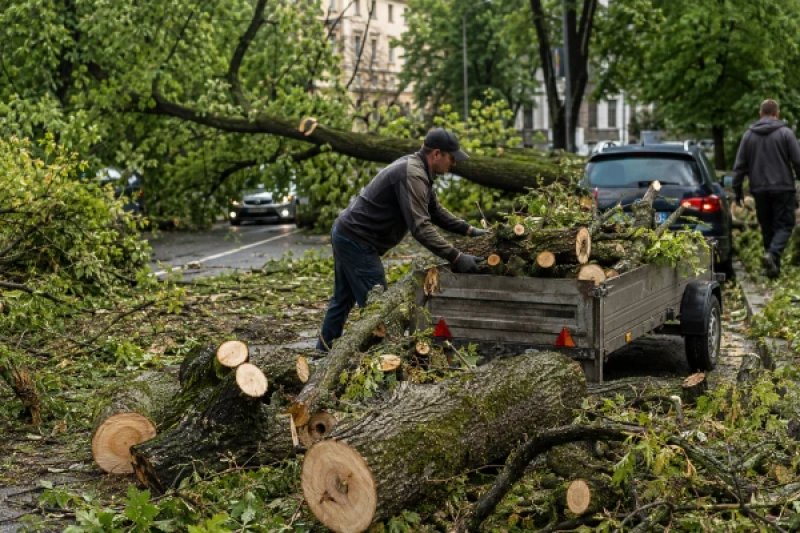
It is explained that there is currently an absurd situation: residents are willing to come themselves, cut up, and remove the storm-felled trees, thereby helping to restore the area more quickly, restore electricity supply, and traffic flow. However, current regulations do not allow this. The municipality is required to consider such wood as property, organize the procedure for its alienation, and fulfill a number of formalities. In many cases, the cost of cleaning up the tree is higher for the municipality than what can be obtained from selling the wood. It is proposed to allow the free transfer of wood, branches, and other plant debris to individuals for personal use after storms, floods, fires, and other natural disasters, if their sale is economically unfeasible or the costs of implementation exceed potential income. Let us remind you that during the storm on August 23, 353 trees were felled or broken in gardens, parks, and Mezaparks managed by the municipal enterprise Rīgas meži, and another 126 were seriously damaged. The most trees were damaged in Mezaparks — 45. In addition, Riga lost four giant trees: an oak in Verman Park, two ashes in Anatomikum Square, and a poplar in Viestura Garden.
