

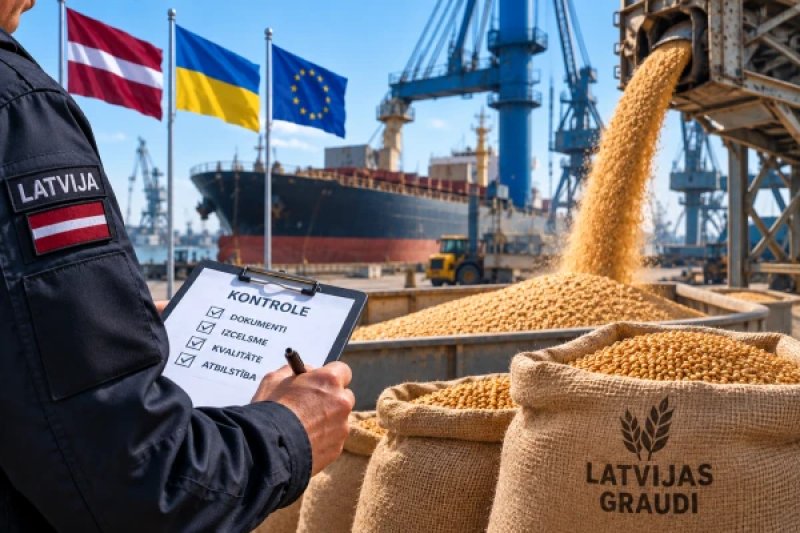
According to the Prime Minister, Ukrainian services have information that Russia plans to export large volumes of illegally exported Ukrainian grain through the Baltic countries in the near future. Ukrainian food security experts and special services will be involved in the inspections. Kyiv, together with the United Kingdom, has already created a database and a system to verify the origin of the grain. Within the next week, Latvian ministries must develop stricter requirements for documents on transit and transshipment batches of grain. In particular, additional declarations and confirmations of the product's origin may be required. A separate mechanism for verifying Ukrainian grain will be created in cooperation with the Ministry of Agrarian Policy and Food of Ukraine. This mechanism will involve the use of Ukrainian databases, document verification, supply chain checks, and the development of technical solutions for laboratory research. Additionally, the Latvian Ministry of Foreign Affairs, along with the ministries of justice, finance, agriculture, and other agencies, must prepare legally justified proposals to restrict cargoes for which there is evidence or reasonable suspicion that the grain originates from temporarily occupied territories of Ukraine. Latvia will also begin exchanging information with Lithuania and Estonia. If the Baltic countries agree on a unified approach, joint restrictions on suspicious cargoes may be considered. Riga intends to raise this issue at the European Union level as well. At the same time, Latvia has expressed its readiness to assist Ukraine in exporting legally produced grain through the ports of Riga, Ventspils, and Liepaja. The government has ordered that Latvian agricultural products be given priority when using railway and port infrastructure.
