

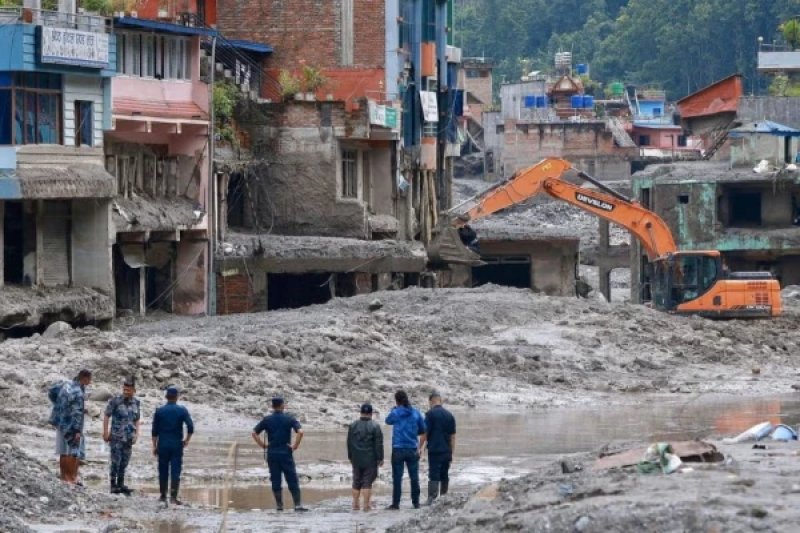
## Villages Buried Under Debris In the areas affected by the disaster, rescuers and locals are clearing the rubble. Entire villages have been buried under torrents of water, mud, and stones, while landslides have blocked roads. The scale of destruction is particularly felt in mountainous regions, where the complex terrain severely complicates rescue and recovery efforts. Delivering aid, clearing roads, and restoring transportation links may take a significant amount of time. The country's government states that billions of dollars will be needed to return the affected regions to normal life. This includes not only repairing homes but also restoring roads, bridges, utility infrastructure, and other facilities. ## The Death Toll May Rise According to available data, at least 1,200 people have died as a result of the floods. Meanwhile, thousands of people are still officially considered missing. Rescue services continue search operations, but the situation remains challenging. Many areas are hard to access, and damaged roads hinder the movement of equipment and rescuers. Scientists are also trying to determine the exact causes of the disaster and identify which natural and climatic factors may have contributed to the occurrence of such destructive torrents of water. ## Why Nepal is Particularly Vulnerable Nepal is among the countries that are especially affected by the consequences of climate change. However, the country's contribution to global greenhouse gas emissions remains extremely small. This contradiction is cited by climate experts as one of the most vivid examples of the uneven impact of global warming. Countries that have historically contributed relatively little to climate change often find themselves among the most vulnerable to its consequences. For Nepal, an additional risk factor is its mountainous terrain. Heavy rainfall combined with landslides and rapid runoff can destroy roads, bridges, and settlements in a short period. ## Recovery Will Be a Huge Challenge Currently, the authorities face a dual task: to continue searching for the missing while simultaneously beginning the long process of recovery. But the scale of destruction means that the country’s own resources may prove insufficient. Nepal must not only restore the damaged infrastructure but also make it more resilient to future natural disasters. This will require significant financial resources and international assistance. The floods have become not just another natural disaster for Nepal, but a large-scale humanitarian and economic catastrophe. Thousands are dead or missing, destroyed settlements and blocked roads have already turned recovery into a national-scale task. Now the country must decide how to simultaneously deal with the aftermath of the disaster and prepare for new climate threats. For a nation with limited resources, this could become one of the most challenging tests in the coming years.
