

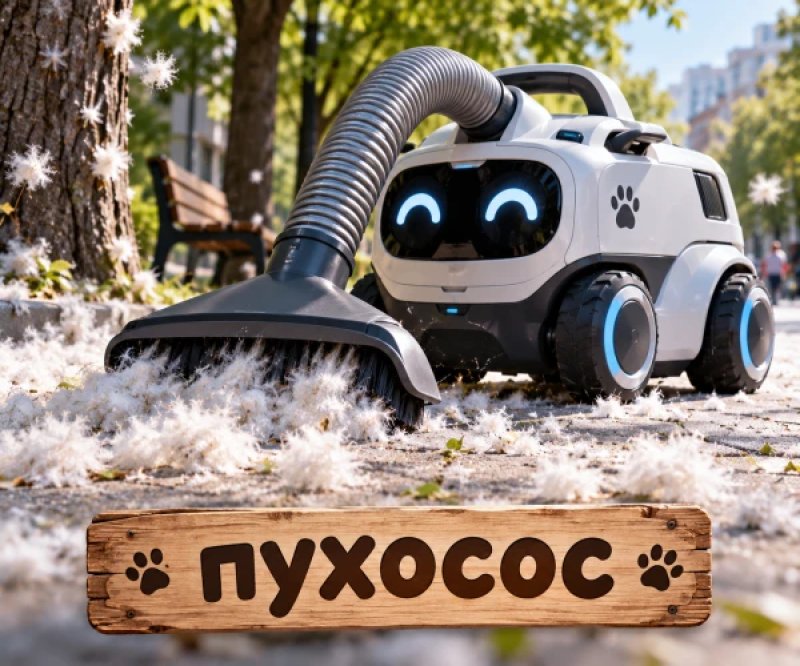
A working group has selected forty candidates for the title of 'Word of the Year 2026 in Russia', and the list turned out to be surprisingly diverse. Among the finalists are words that just a couple of years ago could have caused surprise or meant nothing at all. There is, for example, the meme interjection 'gas' — a call to action (or perhaps just too many drivers suddenly wanted to switch to gas this summer), the noun 'neuroslop' (low-quality junk content mass-produced by neural networks), the adjective 'niche', the mythical 'pukhosos' (a robot vacuum for poplar fluff, existing only on the internet), and 'six-seven' — a shibboleth for those under twenty. Next to them is 'brainrot', which has transformed in just over a year from absurd AI drawings by Italian schoolchildren into a separate genre of internet art. 'Lore', which is not a doctor from the local clinic, but a person's personal 'mythology': their past stories, relationships, strange incidents, meme facts, and events that explain why they are the way they are now. The list contains several semantic blocks. Technology is represented by the words 'AI', 'AI agent', 'neural network', 'prompt', 'vibecoding'. Economics and politics are covered by 'gasoline', 'refinery', 'marketplace', 'Wildberries', 'blocking', 'drone', 'UAV', 'white lists'. Psychology is also present: 'anxiety' (which already won last year but doesn't let go), 'burnout', 'red flag', 'dopamine', 'cancellation', 'memory', 'adaptation', 'manifestation'. Separately, there are socially significant words reflecting collective experiences: 'unity', 'mutual aid', 'peace', 'life', 'hope', 'spirit', 'negotiations', 'millennial', 'locality'. The selection was the first stage. The winners will be determined based on three criteria: the expertise of the working group, public voting, and big data analysis — the most popular words in contemporary Russian-language literature.
