

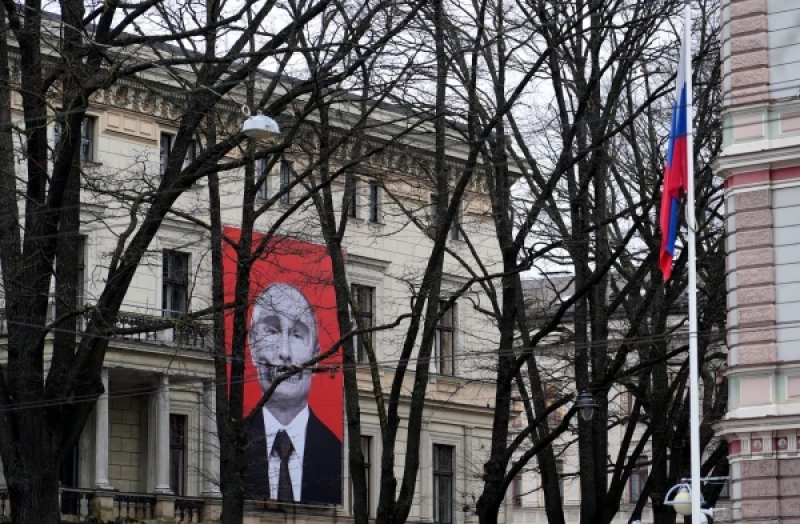
Hybrid threats can manifest not only through cyberattacks, disinformation, or migration pressure. According to the Security Police (SP), another tool could be mass appeals to state institutions, which can create additional burdens on officials and courts, reports the De facto program ([LTV](https://www.lsm.lv/raksts/zinas/latvija/07.09.2026-jauns-hibridkara-panemiens-no-baltkrievijas-iesniegumi-latvija-parbaudes-un-tiesvedibas.a661969/)). The focus has turned to Dmitry Mataev. After being released from custody, he moved to Belarus, but the society he leads, "Residents of Bukulti," continued to actively submit requests to Latvian institutions and challenge their responses in court. The SP does not name specific individuals but warns that certain citizens of Latvia who have moved to aggressor states may be used in hybrid activities against the country. ## From Anti-War Posters to Court Proceedings One of the reasons for the numerous appeals was the anti-war poster by artist Kris Salmanis, placed on the facade of the Museum of the History of Medicine opposite the Russian embassy shortly after the start of the full-scale invasion of Ukraine. The society demanded detailed information about the installation of the poster, and after receiving a response, filed complaints with the Ministry of Health and then in court. According to the Administrative District Court, this year alone, the society has submitted ten similar applications. Legal proceedings have already been initiated for eight of them. They concern various ministries, the State Police, several municipalities, and other institutions. The museum director, Kaspars Vanags, believes that such requests can be used not only to obtain information. > "The question arises: for what purpose is this information being collected?" he noted, suggesting that such appeals could paralyze the work of small state institutions. ## Complaints Against Enterprises and Dozens of Responses from State Services Another target of numerous appeals has been the company Dobeles dzirnavnieks. After the company refused to use Russian in its product descriptions, Dmitry Mataev called for a boycott of its goods. Later, the enterprise appealed to the SP, and its representatives stated that regular complaints lead to numerous inspections and distract employees from their work. According to the report, the Food and Veterinary Service has also experienced significant pressure. Over the past year, it received 16 appeals directly from Mataev or the society he leads, and considering repeated and forwarded applications, prepared almost 40 responses. However, the inspections conducted found no violations. ## Where Is the Line Between Rights and Abuse Experts acknowledge that every resident has the right to appeal to state institutions. However, they point out that the law already provides for the possibility of not considering appeals if the right is used in bad faith or if fulfilling the request requires disproportionate resources and may disrupt the normal functioning of the institution. Edvins Danovskis, an associate professor at the Faculty of Law of the University of Latvia, reminded that the Supreme Court has already defined the criteria for assessing such situations. > "It cannot be that one person, abusing the right to appeal, paralyzes the work of an institution," he emphasized. ## What the SP Says The Security Police confirms that it records cases where Latvian citizens residing in aggressor states submit a large number of appeals to state authorities. According to the service, such activities may be associated with intelligence risks, so institutions are advised to carefully assess both the motives of the applicants and the volume of information provided. Dmitry Mataev himself rejects accusations of abusing his rights and emphasizes that he has the legal right to appeal to state institutions. Meanwhile, the prosecutor's office has already concluded that the activities of the society "Residents of Bukulti" pose a threat to state and public security and has appealed to the court to terminate its activities. The consideration of this case has not yet begun. History shows that mass appeals to state institutions become not only a legal issue but also a matter of national security if they are used to systematically overload state resources.
