

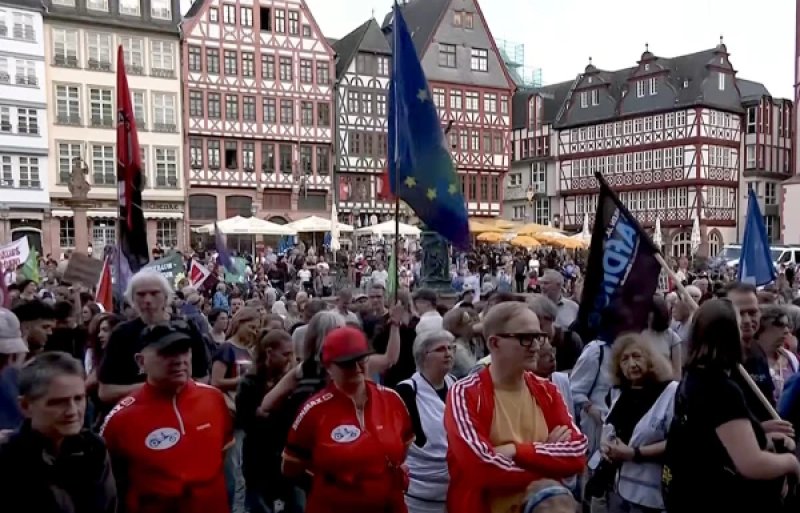
Mass protests have erupted in Germany following the victory of the Alternative for Germany (AfD) party in the Saxony-Anhalt state parliament elections. Demonstrations took place in several federal states across the country. The largest protest was held at the Brandenburg Gate in Berlin. According to police, around 5,000 people participated, while organizers estimated the number of participants to be approximately 14,000. No serious incidents were reported during the demonstration. The Berlin protest was organized by the civic organization Campact and the climate movement Fridays for Future. Climate activist Luisa Neubauer joined the protesters, along with representatives from the parties Alliance 90/The Greens and The Left, who are participating in the upcoming Berlin parliament elections. Participants carried placards with slogans against the AfD and chanted anti-fascist calls. Protests also occurred in other regions of Germany. In Mecklenburg-Vorpommern, where elections for the state parliament will also take place on September 20, several hundred people gathered for demonstrations in Schwerin, while in Rostock, more than 500 participants took part in a joint singing event. In Essen, around 1,200 people marched through the city center with placards calling for a ban on the AfD and rainbow flags. Protests also took place in Potsdam and in the federal state of Hesse, including Kassel. Even before the nationwide protests, a demonstration took place in Frankfurt am Main on Sunday, where organizers reported around 2,500 participants. One of the demands from participants was to consider banning the AfD. The protests were sparked by the convincing victory of the AfD in the Saxony-Anhalt parliament elections. The party received the highest number of votes but was unable to secure an absolute majority, thus cannot independently form a state government. These actions demonstrate that the AfD's success in regional elections has not only triggered active political discussions but also a broad public response. Moreover, new regional elections are set to take place in Germany in just two weeks — in Berlin and Mecklenburg-Vorpommern, where the party's positions also remain strong.
