

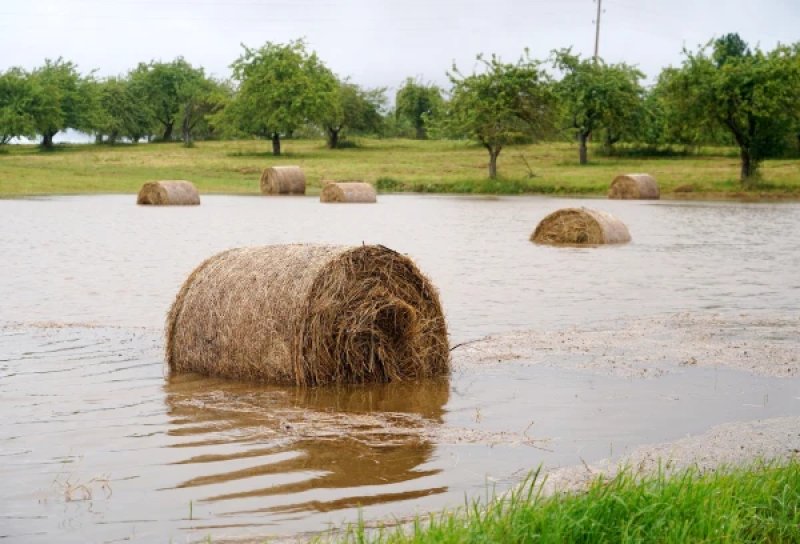
Latvia has concluded one of the wettest years in the history of meteorological observations. According to the Latvian Environment, Geology and Meteorology Centre, from June to August, an average of 288 millimeters of precipitation fell across the country — this is 129% of the climatic norm. This figure is the highest since 2016, when 312 millimeters of precipitation were recorded over the summer. Overall, the summer of 2026 ranked 13th among the rainiest summers in the history of observations. Precipitation was distributed very unevenly across the country. The driest city was Rēzekne, where 198.5 millimeters of rain fell. At the same time, in Bauska, Kuldīga, and several areas in northern Kurzeme, the amount of precipitation exceeded 350 millimeters, while in Vīčaki of Ventspils Municipality, it reached 395 millimeters. For Bauska, Ventspils, and Vīčaki, this summer was the rainiest on record. After a prolonged drought that ended with the arrival of June, the precipitation quickly compensated for the moisture deficit. July turned out to be the rainiest month, ranking among the top five wettest Julys in the history of meteorological observations in Latvia. August 22 was particularly memorable, when the country was hit by the strongest summer storm since observations began. In just one day, 103 millimeters of precipitation fell in Kolka, while the average across the country reached 35.2 millimeters, setting a new record. This storm brought not only heavy rains but also very strong winds. In Daugavgrīva, gusts reached 31 meters per second, slightly exceeding the typical summer values. Despite the rainy weather, the summer turned out to be warmer than the climatic norm. The average air temperature was +17.1 degrees, which is 0.4 degrees higher than the long-term average. The coldest day was June 1, when the temperature in Daugavpils dropped to +2.8 degrees. The highest temperature was recorded on June 28 in Mērsrags — +33.2 degrees. At the same time, the summer was relatively calm in terms of temperature records. Over the three months, only 12 heat records were broken — the lowest figure in recent years. No new cold records were recorded by meteorologists. Thus, the summer of 2026 will be remembered primarily not for extreme heat, but for abundant rains and a powerful August storm that entered the history of Latvian meteorology.
