

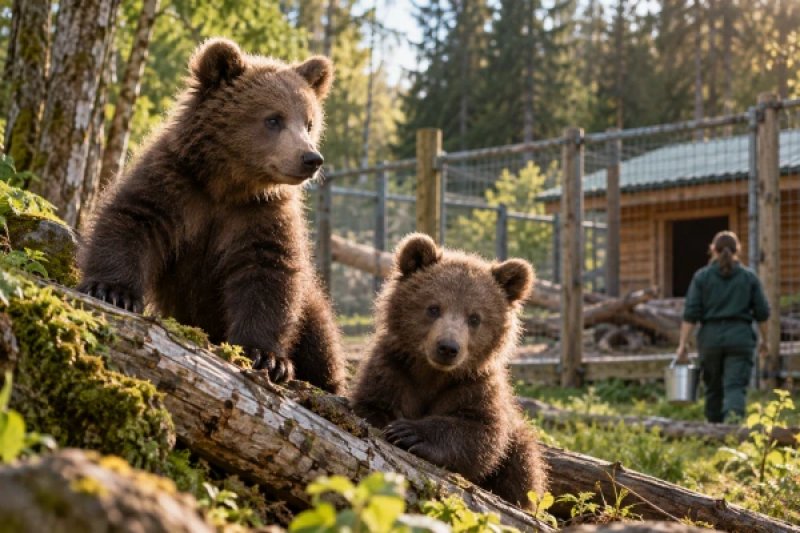
According to the society, the Department of the Environment issued a permit for the shooting of two small bear cubs, whose only "fault" was searching for food near human dwellings where food was easily accessible. The organization believes that this is how animals form an association between humans and food. According to the board of the Wildlife Society, it has been discussing the need for a rehabilitation enclosure for bear cubs in Estonia with the Department of the Environment for many years. Society representatives studied foreign experiences in organizing bear cub rehabilitation and confirmed that the necessary conditions can be created in Estonia. At a meeting in May at the Department of the Environment, the society was informed of the department's position: conditions for the construction of rehabilitation enclosures for bear cubs will be developed, which will then be sent to the organization for review and additions. However, according to the society, these conditions had not been provided by autumn. The Wildlife Society believes that the problem of orphaned bear cubs is often related to human activity. Bears may come to humans in search of food if, for example, beehives are not protected, fences are in disrepair, or waste management is poorly organized. The society notes that young animals pay a high price for such oversights. The Wildlife Society calls on all willing individuals, businesses, and organizations to help create a rehabilitation center for bear cubs and to contact the society's representatives. Donations can be made with the note "Karude rehabilitatsiooniks" ("For Bear Rehabilitation").
