

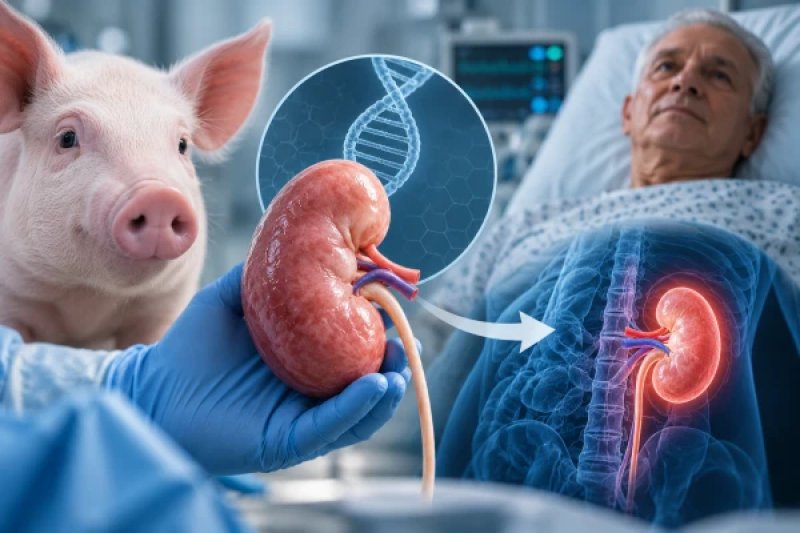
Andrews suffered from severe kidney failure and had extremely low chances of waiting for a suitable human organ. In January 2025, surgeons at Massachusetts Hospital transplanted a genetically modified pig kidney into him. Before the transplantation, scientists made 69 modifications to the animal's genome. These changes were intended to reduce the risk of organ rejection by the human immune system and protect the patient from potentially harmful pig viruses. The transplanted kidney functioned for 271 days – a record duration for a pig kidney xenotransplantation in a living human. Approximately six months later, damage began to develop in the blood vessels of the organ, and after nine months, the kidney was removed. After several months of dialysis, Andrews received a human kidney transplant. According to researchers, the pig kidney did not trigger the production of new antibodies against human tissues and did not interfere with the subsequent transplantation. Scientists believe that such technology could become a temporary solution for patients who wait for years for a human kidney in the future. However, specialists emphasize that this is currently only one case, and further clinical trials are necessary.
