

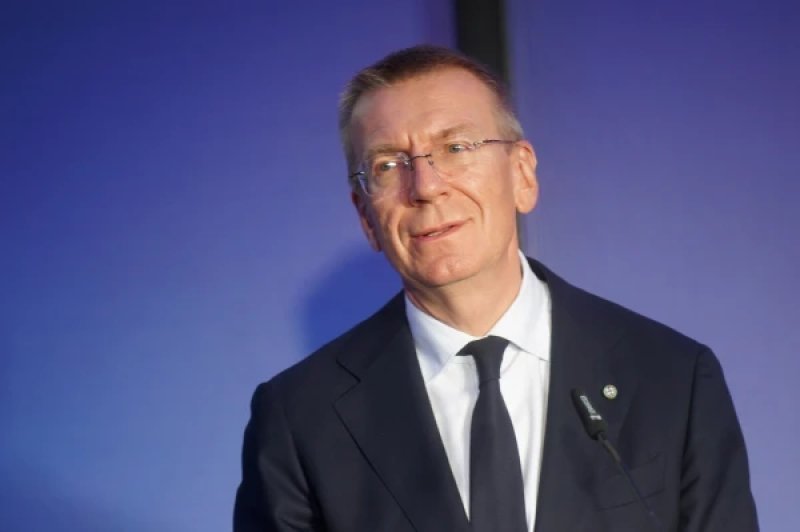
**“Deutsche Welle”**: - A fairly large Russian-speaking part of the population lives in Latvia. How do you assess the role of these people in ensuring the security of Latvia? **Rinkevics**: - We have seen enormous efforts by Russia in the field of propaganda and information warfare. And, unfortunately, I must say that today social media plays a much more effective role than traditional media, at least in spreading certain narratives. The main one is that helping Ukraine means we are spending money in the wrong direction. We still see how Russian propaganda tries to influence not only Russian speakers but also the entire Latvian society, convincing it to stay away from this and not to interfere, because supposedly no one will touch anyone. To some extent, this is happening not only here in Latvia but throughout Europe. And it is not only about Russian speakers but also about the population as a whole. As we see from the political processes in many countries, this propaganda turns out to be quite successful. What do we need to do? We need to invest significantly more in promoting our own information agenda and working with the population. But overall, Russian speakers should not be seen as a single block unanimously supporting Russia's actions. Part of these people, unfortunately, supports Russia's actions – but there are also those among them who strongly support Ukraine because they come from there. There are many people who simply prefer to stay on the sidelines and wait for how all this will end. **What else was discussed** * Russia, according to Rinkevics, does not show readiness for a real dialogue. Even when contacts occur, Moscow, in Rinkevics' opinion, uses them primarily for its own public diplomacy, and they do not yield real results. * The President of Latvia urges not to perceive Russian actions as merely “hybrid threats.” Cyberattacks, sabotage, espionage, information warfare, and the use of migration, he says, are actually direct attacks against European countries. * At the same time, Rinkevics does not rule out future dialogue. His position is rather that talking to Russia is possible and necessary when a real peace process and conditions for substantive negotiations arise. * A very important phrase from the interview: Europe must be “at the negotiating table, not on the negotiating table.” That is, Europeans should not become the object of agreements between the USA and Russia, accepting a ready-made decision. Europe must participate in shaping the conditions for peace itself.
