

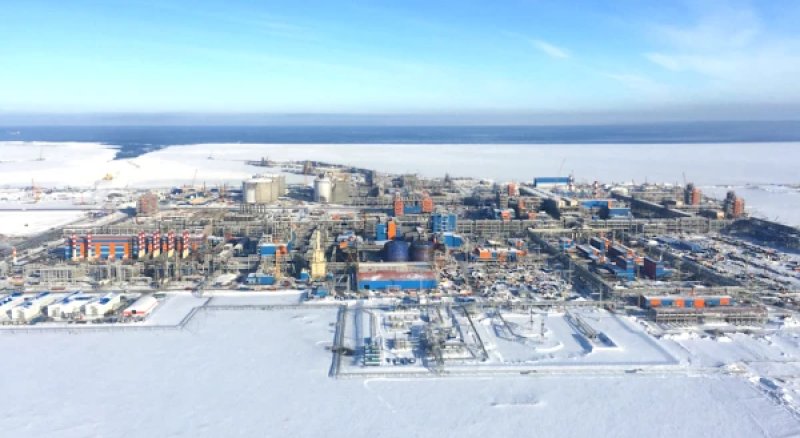
Two European companies dominate the Arctic maritime transport network: the Scottish company Seapeak and the Greece-linked shipping company Dynagas. The vessels owned by these two European companies accounted for 72% of all LNG exports from Yamal. Despite public statements about severing economic ties with Russia, Europe has paid about €7.28 billion for liquefied natural gas (LNG) from the Russian Arctic project "Yamal LNG" in the first eight months of this year, already exceeding the figure of €7.3 billion recorded for the entire year of 2025. This data was revealed during an investigation conducted by the German NGO Urgewald, which identifies financial institutions and companies supporting projects that harm the climate. According to Urgewald, in the first eight months of 2026, 156 LNG shipments from "Yamal" arrived at European ports, totaling 11.39 million tons, while during the same period in 2025 (from January to August), 142 shipments with a volume of 10.34 million tons were delivered; thus, the year-on-year growth was 10.1%. Operational data from the analytical company Kpler indicates that from January 1 to September 5 of this year, European ports accounted for 88.9% of all global exports from "Yamal", while in 2025 this figure was 78.2%. "This indicates that EU buyers are trying to maximize imports ahead of the ban that comes into effect in January 2027. Most of these volumes are supplied under existing long-term contracts, as the purchase of LNG under short-term contracts was banned back in April of this year," said Kpler energy analyst Charles Costerruz to Euronews. Energy analysts estimate that the EU exceeded the total annual purchase volume in just eight months and five days. This occurred under the influence of a "perfect storm" of factors: rising gas prices in Europe and increased supply volumes caused by the conflict in the Middle East disrupting the key energy transport route through the Strait of Hormuz. In this maritime transport system, two European companies dominate: Glasgow-based Seapeak and the Greece-linked shipping company Dynagas. In total, vessels associated with these two European companies accounted for 72% of all LNG export volumes from the "Yamal LNG" project. Six Arc7 ice-class tankers operated by Seapeak (headquartered in Glasgow) transported 65 shipments with a total weight of 4.73 million tons from January to August. Ships from Dynagas, linked to Greek business, delivered another 62 shipments with a total weight of about 4.5 million tons. "Europe claims to be rejecting Russian energy resources. However, these figures indicate the opposite," noted Alexander Kirk, senior campaign coordinator at Urgewald. "In the first eight months of the year, the EU purchased 10% more LNG from 'Yamal', receiving almost 9 out of every 10 tons exported by this project." Costerruz added that the largest importers of LNG from "Yamal" in Europe include France (4.4 million tons), Belgium (3 million tons), Spain (2.7 million tons), and the Netherlands (1.1 million tons). ## ## EU Leaders Meeting in the Arctic This surge in trade occurs at a very delicate moment: on September 13, leaders of European countries arrived in Finland for a summit on European Arctic issues, while diplomats in Brussels prepare the 22nd EU sanctions package (with Greece securing an exemption from the ban on importing Russian LNG). According to the investigation results, Europe is not only the main buyer of Russian products but also a key link in the logistics chain of Arctic trade, creating a serious vulnerability for Moscow. As Arctic waters are ice-bound for most of the year, Russia uses 15 specialized Arc7 ice-class tankers for navigation. Short trips to European ports allow these vessels to quickly unload fuel and return to Siberia. If Russia had to send these same vessels to Asia in winter, the journey would take several weeks longer, and the overall volume of Russian gas exports would collapse. In August 2026, "Yamal" distributed export volumes almost evenly: seven shipments totaling 497,945 tons were delivered to European ports, while another seven shipments (493,855 tons) were sent to destinations in Asia. However, while the summer opening of the Northern Sea Route allowed Russia to temporarily split export deliveries evenly between Europe and Asia in August, this "window of opportunity" is closing. By December, the eastern route to Asia becomes impassable due to ice, making direct deliveries impossible and forcing Russia to reorient back to the European direction. ## ## Upcoming Ban on Importing Russian LNG However, the crucial test will come on January 1, 2027, when the official EU ban on importing Russian LNG and related maritime services is set to come into full effect. Experts warn: if Russia loses access to EU ports, its activities in the Arctic will face unprecedented pressure. While European leaders gather in Rovaniemi, Finland, to coordinate efforts to ensure security in the Arctic in the face of Russian expansion, activists point out that the Kremlin's military treasury is being directly replenished by European energy companies.
