

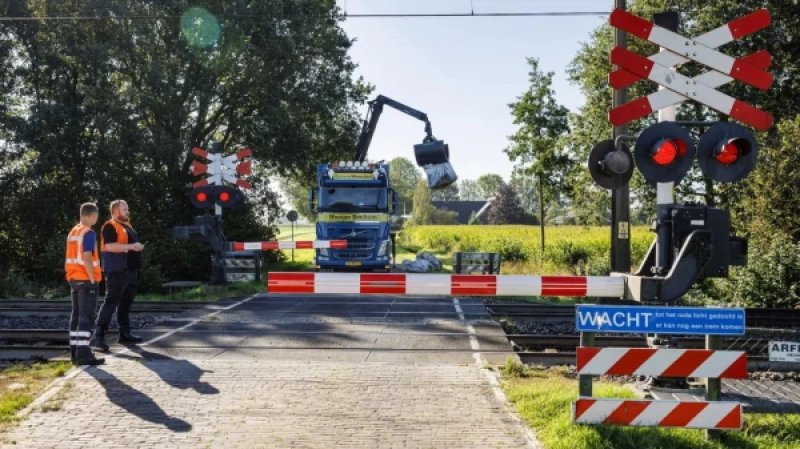
As [reported](https://bb.lv/statja/v-mire/2026/09/15/sem-tocek-sabotaza-za-odno-utro-neizvestnye-ustroili-besprecedentnuiu-diversiiu-na-zeleznyx-dorogax-niderlandov) by bb.lv, on the morning of September 15, train services in several regions of the Netherlands were disrupted due to a large-scale sabotage. Unknown individuals attached metal pipes to the tracks, paralyzing rail transport in the central, eastern, and northern parts of the country. One train collided with an obstacle, but fortunately, an accident and injuries were avoided. "I find what is happening truly terrible," said Mirjam van Veltuyzen, chair of the ProRail board, on the *Nieuwsuur* program. After the sabotage, the company increased video surveillance and patrolling of the railway network. However, it is impossible to fully monitor the tracks: their total length in the Netherlands is about 7,000 kilometers, [reports](https://nos.nl/nieuwsuur/artikel/2631181-weinig-beelden-en-geen-idee-over-daders-sabotage-zegt-prorail-baas) NOS. "What these people did is extremely dangerous. I urge them to stop: if there is a foreign object on the tracks, the train can derail," emphasized the head of ProRail. ## Cameras May Not Have Captured the Saboteurs The identities of the perpetrators have not yet been established. There are reports of possible involvement of farmer activists: according to NOS, in some agricultural internet groups, radical protest actions, including methods of attaching pipes to the tracks, were discussed before the opening of the parliamentary year. However, this is still just one version of the investigation. The protest organizations Agractie and Farmers Defence Force stated that they have no connection to the incident. At the same time, a representative of Farmers Defence Force, Mark van den Uwer, did not rule out that the sabotage could have been carried out by individual farmers. Hopes of identifying the perpetrators from video recordings are slim. According to Van Veltuyzen, most of ProRail's cameras are located near railway crossings. They are mainly used to prevent suicides and monitor traffic safety. There are significantly fewer cameras in the areas where the sabotage occurred. ## The System Stopped Trains in Almost 35 Locations Unknown individuals attached metal pipes to the tracks, disrupting the control system's operation. In almost 35 locations, the automation detected interference, after which the railway signals switched to red. According to the head of ProRail, the safety system functioned properly: when a violation was detected, information was automatically sent to the dispatchers, and train movement was blocked. However, there is a more dangerous scenario. If an object is placed on the tracks in such a way that the system does not recognize it, the signals may not switch to red. This is presumably what happened near Stenwijk, where a train collided with an object on the tracks. The train did not derail, and no one was injured. Van Veltuyzen noted that for the train driver, such a situation becomes a serious test: he sees an obstacle ahead and is responsible for the safety of the entire train. ## Sabotage Can Result in 15 Years in Prison Professor Bart Schuurman of Leiden University, an expert on terrorism and political violence, believes that what happened goes far beyond ordinary vandalism or protest actions. According to him, the perpetrators allowed for the possibility of trains derailing, collisions, and the death and injury of people—even if causing harm to passengers was not their immediate goal. If they truly wanted to avoid casualties, they should have warned in advance about the obstacles laid down. The prosecution may apply Article 164 of the Dutch Penal Code regarding the intentional creation of danger for railway and air transport. The maximum penalty under this article is 15 years of imprisonment. If a terrorist motive is established, the sentence could be even longer. In addition to criminal penalties, potential perpetrators face multimillion-dollar lawsuits. Due to the stoppage of movement, cancellation of flights, and disruption of schedules, railway companies incurred losses that could be claimed from the convicted. ## 600 Million Euros Needed for Track Protection As early as the end of 2025, experts warned that the Dutch railway network is insufficiently protected against sabotage, cyberattacks, and other hybrid threats. According to a prepared report, at least 600 million euros is needed to enhance the resilience of the railways. The head of ProRail called on the government to allocate these funds. According to her, what happened showed that the railway infrastructure needs additional protection. Despite the seriousness of the situation, Van Veltuyzen praised the work of ProRail employees, who managed to promptly stop movement and avoid major accidents. At the same time, there is ongoing anxiety and outrage among railway workers due to the fact that unknown individuals deliberately endangered passengers and train drivers. The automatic safety system prevented a possible disaster, but the sabotage revealed a serious vulnerability—thousands of kilometers of tracks cannot be monitored continuously, and many sections lack cameras. If the perpetrators are found, they could face long prison sentences and multimillion-dollar claims for damages.
