

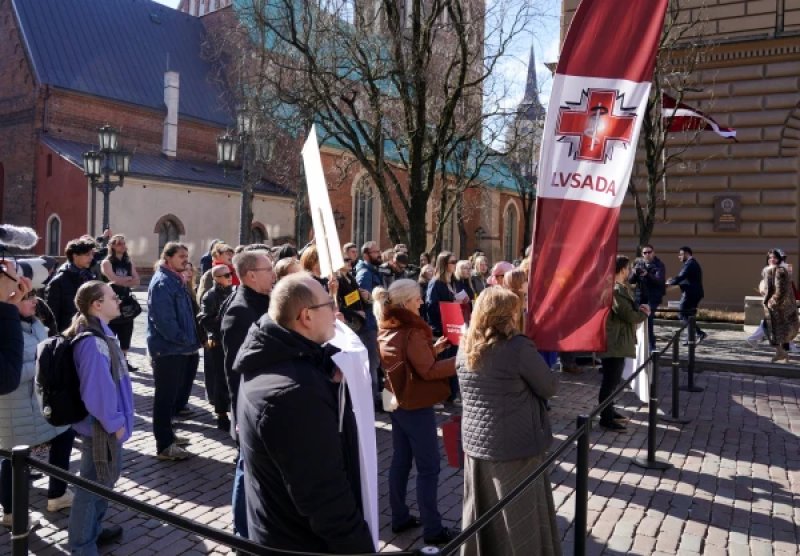
The Council of the Latvian Health and Social Care Workers' Union (LVSADA / LPRZSU) has decided to maintain its demands to the government while preparing the state budget for 2027. In addition to holding a protest outside the Cabinet of Ministers, the organization expressed distrust in the Minister of Health and called for his resignation. The main demand of the union remains a salary increase for all healthcare workers of at least 30%. According to LPRZSU, the necessary funds should be included in the state budget and incorporated into the tariffs for state-paid medical services. Furthermore, the union proposes to revise the rules regarding the minimum wage and special allowances for medical professionals, as well as to create a mechanism for regular indexing of wages. The decision was prompted by the results of negotiations with the Ministry of Health. In September, the ministry reported that a 25.4% salary increase would require about 228.7 million euros. However, as noted by the union, no specific decision was made regarding the allocation of funds and the timeline for its approval. LPRZSU also draws attention to the draft state budget, which estimates the total additional need for the healthcare system at 663 million euros. However, only 45.2 million euros is allocated for staffing, and the document does not specify what amount will actually be allocated. For patients, the dispute over funding means that one of the key issues in the sector remains the shortage of medical personnel and the high workload on existing staff. These are the main reasons the union cites for its demands. The organization states that if the government does not make specific decisions regarding increased funding for healthcare and salary increases, the Council of LPRZSU will consider the possibility of further legally prescribed collective actions. The union chair, Liga Barinya, stated that there have been no significant changes in the sector since 2021. According to her, the union is also dissatisfied with the interaction with the Ministry of Health and believes that the interests of the sector are not adequately represented in discussions of government decisions. As one of its arguments, LPRZSU cites data from the European Commission. According to a report published this year, Latvia has 3.4 doctors and 4.2 nurses per thousand residents, while the average in the EU is 4.3 doctors and 7.6 nurses. Additionally, over 40% of doctors and nurses in the country are aged 55 and older. Thus, the discussion of the budget for 2027 becomes one of the key stages for the healthcare system, as the outcomes will determine whether the sector receives the additional funding that the union insists upon.
