

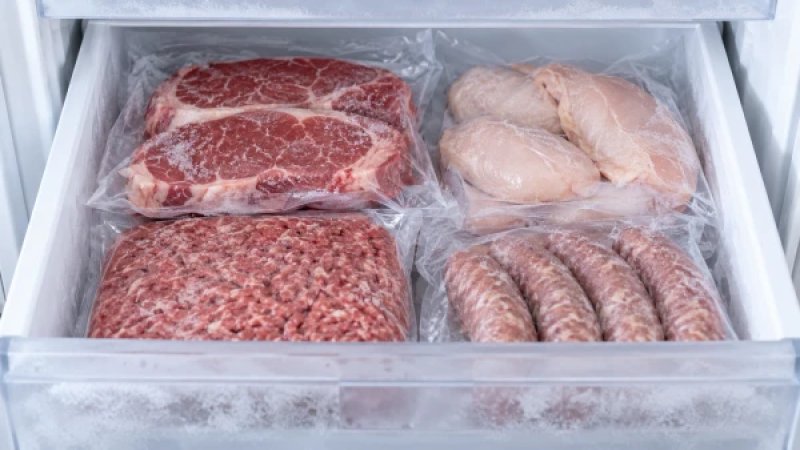
At a constant temperature of −18 °C and below, frozen foods can remain safe indefinitely. However, the recommended storage times are not arbitrary: over time, meat loses moisture, changes texture, and acquires off-flavors. Freezing also does not kill all microorganisms — after thawing, they can become active again. ## How Long to Store Meat According to the recommendations of the U.S. Food Safety and Inspection Service, the optimal storage times are as follows: * steaks, chops, and large cuts of raw meat — 4–12 months; * ground meat — 3–4 months; * raw sausages and hot dogs — 1–2 months; * bacon — about a month; * whole chicken or turkey — up to 12 months; * poultry parts — up to 9 months; * organ meats — 3–4 months; * game — 8–12 months; * fish — 3–8 months; * shellfish and crustaceans — 3–12 months. These times primarily relate to preserving flavor, juiciness, and normal texture, rather than the point at which the product automatically becomes unsafe. ## Why Meat Spoils Even in the Freezer Low temperatures stop the reproduction of microbes but do not prevent the gradual oxidation of fats. Quality decreases particularly quickly if the packaging allows air to enter. Dry gray or brown spots may appear on the surface — this is known as freezer burn. It does not make the meat unsafe, but the product becomes dry, tough, and less tasty. Heavily damaged areas can be trimmed off. ## How to Properly Freeze Meat should be sent to the freezer fresh, without waiting for the expiration date. It is advisable to wrap factory packaging in plastic wrap or foil or place it in a freezer bag, removing the air from it beforehand. The packaging should be labeled with the freezing date. Products with earlier dates should be placed closer to the front to be used first. The temperature in the freezer must be maintained at −18 °C or lower. It is safe to thaw meat in the refrigerator, cold water, or microwave. Leaving it on the kitchen counter is not recommended. After thawing in water or the microwave, the product should be cooked immediately. The main rule is simple: deep freezing protects meat from microbial spoilage for a long time, but does not preserve its quality indefinitely. The better the packaging and the more stable the temperature, the longer the product will remain juicy and tasty.
