

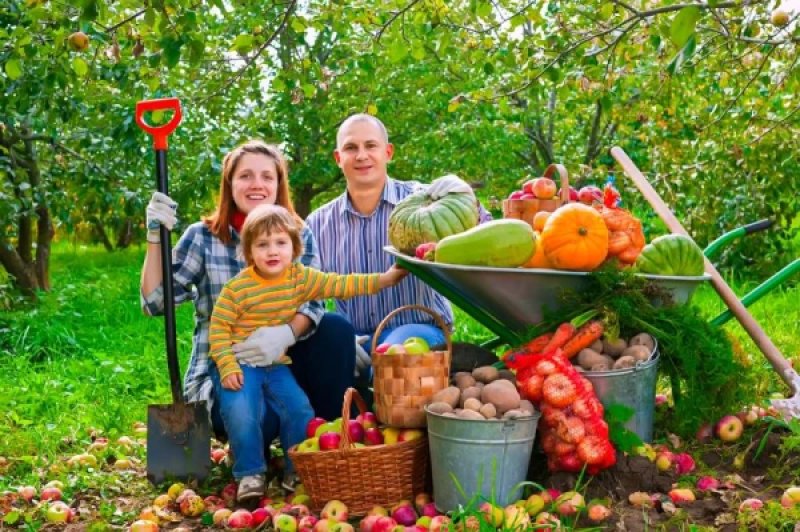
While the weather remains warm and dry, I try to dig up the plots that have been cleared of plantings and fertilize them with manure, chicken droppings, compost, and other fertilizers. An important task is the sanitary and formative pruning of trees and shrubs, their whitewashing, feeding with organic and mineral substances, as well as treatment against pests. At this time, I plant young trees and bushes, as well as winter garlic and strawberries.There is also work to be done in the flowerbed. First, I dig up, dry, and store the bulbs of tulips, gladioli, and other flowers that grow from bulbs and tubers. Secondly, I cut the stems of withered plants or, if pruning is not required, I treat them for pests and diseases. Sometimes I plant irises, hyacinths, daffodils, and other flowers for the winter.When I finish all the work, I breathe a sigh of relief — the long-awaited time for rest and leisurely planning of future plantings arrives...How to Protect the Harvest from BirdsDuring the ripening of the harvest, it is necessary to protect it from the invasion of birds. For this, I cover all the bushes and trees with nets. It is better to choose a net with very small cells so that the birds cannot reach the fruits.You can also tie bunches of New Year’s tinsel to berry trees and bushes. When the wind blows, the tinsel sways, rustles, and glitters, which scares the birds away.After the harvest is collected, the protection can be removed, allowing the birds to peck at beetles and caterpillars.The Approach to Raspberries is Special!I grow different berries — gooseberries, currants, and raspberries. The approach to them requires different care. For example, in the rows between gooseberries and currants, I turn the soil with a pitchfork, while raspberries cannot tolerate this: near them, you can only lightly loosen the soil and sprinkle it with dry peat.For such delicate treatment, they reward me with a good harvest every year.Planting Garlic for WinterTo get large yields of garlic planted for the winter, I take into account several nuances of planting work.* To determine when exactly to plant the cloves, you need to look at the long-term weather forecast and carry out planting activities no earlier than a couple of weeks before the first stable frosts. Otherwise, the cloves may sprout too early, and the tender shoots will freeze.* The plot for planting should be chosen in a raised area (so that it is not flooded in spring), where legumes, pumpkins, or nightshades (except root vegetables) previously grew. Onions are a poor predecessor for garlic, as they share common diseases.* The soil acidity should be neutral. Manure or bird droppings can only be applied in well-rotted form; otherwise, there will be a lot of greenery, and the heads will grow loose. It is easier for me to use mineral fertilizers (1 tablespoon of a mixture of nitrogen, potassium, and phosphorus fertilizers per 1 square meter).* It is essential to disinfect the planting material in a solution of soda (1 teaspoon per 1 cup of warm boiled water).* Cloves should be buried in the soil by 4-5 cm. The intervals between them should be up to 8 cm, and between the rows — up to 20 cm.* The bed should be mulched with a thick layer of compost (up to 10 cm). Don’t forget to rake it aside in spring so that the garlic shoots can break through to the light more quickly.“1000 Secrets”.
