

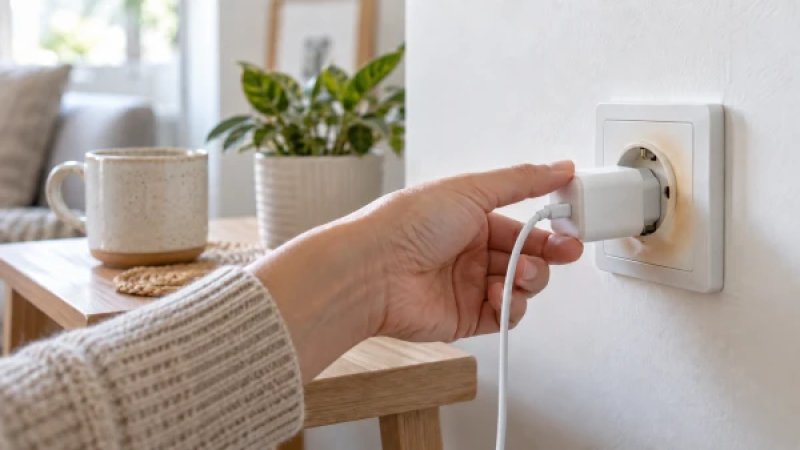
As noted by the British organization Electrical Safety First, damaged, counterfeit, and low-quality chargers pose a particular danger. They may not pass mandatory safety checks and carry an increased risk of overheating, fire, and damage to connected devices. ## Can a Charger Overheat Without a Phone Even if the smartphone is turned off, the adapter remains plugged into the power outlet. Proper modern models consume very little energy in this mode and are equipped with protection against overheating, short circuits, and overloads. However, any device can fail. The risk increases if the charger is uncertified, has internal damage, has been in use for many years, or is plugged into a faulty outlet. A quality power supply left in the outlet is not necessarily going to overheat or catch fire. But unplugging it completely eliminates the associated risk and simultaneously stops even minimal electricity consumption. ## Which Chargers Are Particularly Dangerous The device should be immediately stopped from use if: * the casing is cracked or deformed; * the cable is frayed or the wires are exposed; * the plug does not fit snugly in the outlet; * the block gets very hot; * there is a smell of melting plastic or smoke; * there are crackling, buzzing, or other unusual sounds; * there are signs of darkening or burning on the adapter or outlet; * sparks appear when plugging in. A faulty adapter should not be disassembled or repaired by oneself. It should be replaced with a quality device suitable for the specific phone or other device. ## Why You Shouldn’t Skimp on a Charger A low price does not in itself mean that the device is dangerous. The origin of the product, compliance with safety requirements, and the reputation of the seller matter. Counterfeit adapters may have inadequate insulation, cheap components, and unreliable protection against voltage surges. Electrical Safety First recommends purchasing chargers from reputable sellers rather than unknown suppliers on online platforms. You can use not only the original adapter from the phone manufacturer but also a quality compatible model that meets the necessary standards. ## Why Charging at Night Is More Dangerous The main problem with overnight charging is not that a modern phone will necessarily "overcharge." Electronics usually stop active charging once the battery is full. The risk is associated with the fact that a sleeping person may not notice overheating, the smell of plastic, sparking, or smoke in time. Therefore, experts recommend not leaving the charger running unattended. It is especially dangerous to charge a phone on a bed, sofa, under a pillow, or blanket. Soft materials hinder heat dissipation and can easily catch fire. The phone and adapter should be placed on a hard, flat surface in a well-ventilated area. ## How to Properly Use a Charger After charging is complete, it is advisable to disconnect the phone from the cable and the adapter from the outlet. Additionally, one should: * use the original or a quality compatible charger; * follow the manufacturer's recommendations; * not use damaged blocks and cables; * not cover the phone and adapter while in use; * keep the charger away from water, heating appliances, and direct sunlight; * not charge devices on a bed or sofa; * not leave the device charging when leaving home; * regularly check the adapter and outlet for overheating and signs of burning; * install and regularly check home smoke detectors. ## Final Answer A functioning certified charger left in a functioning outlet without a phone typically does not become a fire hazard. Therefore, the claim that any adapter will inevitably catch fire is an exaggeration. However, it is still not advisable to leave it plugged in without necessity. By unplugging the charger from the outlet after use, you eliminate even a small risk of malfunction, extend the device's lifespan, and stop unnecessary energy consumption. This rule is especially important for old, cheap, damaged, or overheating adapters.
