

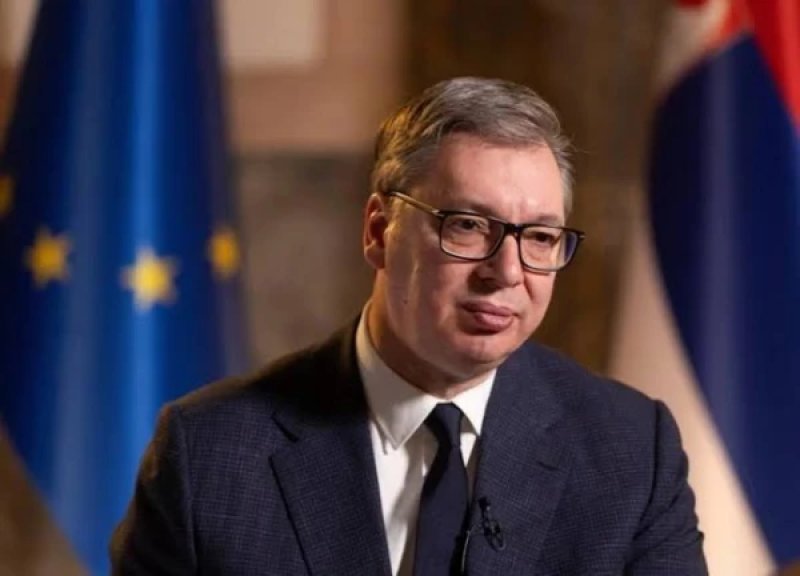
The Specialized Chambers of Kosovo on September 16 found former Kosovo President Hashim Thaçi and three other former high-ranking KLA leaders guilty of committing war crimes during the 1998–1999 conflict. Hashim Thaçi and Jakup Krasniqi received **25 years in prison**, Kadri Veseli — **18 years**, and Rexhep Selimi — **13 years**. Time already spent in custody will be counted towards their sentences. ### What they were found guilty of The court established the criminal responsibility of all four defendants for a number of war crimes. According to the official statement from the Specialized Chambers, this includes unlawful or arbitrary detention of **385 people**, cruel treatment of **49**, torture of **303 people**, and murders of **96 people**. The court concluded that the victims were individuals considered opponents of the political or military goals of the KLA. Among them were Kosovo Albanians associated with competing political and military forces, people suspected of collaborating with Yugoslav or Serbian authorities, as well as representatives of ethnic minorities, including Serbs and Roma. At the same time, the defendants were **acquitted of charges of crimes against humanity**. The judges determined that the prosecution failed to prove beyond a reasonable doubt the existence of a widespread or systematic attack against the civilian population. Some individual episodes of war crimes also resulted in acquittals. ### What Vučić said Serbian President Aleksandar Vučić called the verdict evidence of "hypocrisy" and "double standards". According to him, the attitude toward the events of the war in Kosovo remains unequal: Serbs, as Vučić claims, continue to be portrayed as criminals, while representatives of the other side are seen as freedom fighters and heroes. "If we do not remember our victims, no one will ever remember them," stated the President of Serbia. Vučić also expressed surprise at the reaction of the international community to the glorification of the KLA and its former leaders after the verdict was announced. This is the position of the Serbian president, not a conclusion of the court. ### Why the court is in The Hague The Specialized Chambers of Kosovo were established in 2015. Formally, they are part of the judicial system of Kosovo, but they are located in the Netherlands and operate with international judges and prosecutors. The case against Thaçi, Veseli, Selimi, and Krasniqi was considered for several years. The court received testimonies from approximately **270 witnesses**, accepted **5467 pieces of evidence**, and the transcript of the proceedings grew to nearly **29,300 pages**. All four have been in custody since November 2020. Thaçi, who held the position of President of Kosovo, resigned at that time after the indictment was confirmed. He and the other defendants denied the charges against them. ### The verdict provoked a completely different reaction in Kosovo The attitude toward the trial in Serbia and Kosovo is noticeably different. In Kosovo, many still perceive the KLA primarily as a movement that fought for independence from Serbia. Before the announcement of the decision, thousands of people gathered in Pristina to support Thaçi and the other defendants. After the verdict was announced, it also provoked sharp criticism from some Kosovo politicians and supporters of the former KLA commanders. The court specifically emphasized the principled difference: the trial concerned the individual criminal responsibility of the four defendants, not the assessment of the KLA as a whole or the legality of Kosovo's struggle for independence. A similar position was expressed after the announcement of the decision by specialized prosecutor Kimberly West, who stated that the case concerned the actions of specific individuals. The verdict became one of the most significant judicial decisions related to the war in Kosovo: the former president of Kosovo and three other influential KLA leaders received sentences ranging from 13 to 25 years for war crimes. At the same time, the verdict once again demonstrated how opposing the perceptions of the 1998–1999 war remain in Serbia and Kosovo. For Vučić, the decision became an occasion to speak again about the "double standards" of the international community; in Kosovo, many supporters of the former KLA leaders consider the trial itself to be unjust. The court, for its part, emphasizes that it considered the responsibility of specific defendants for specific crimes, rather than providing a political or historical assessment of Kosovo's struggle for independence.
