

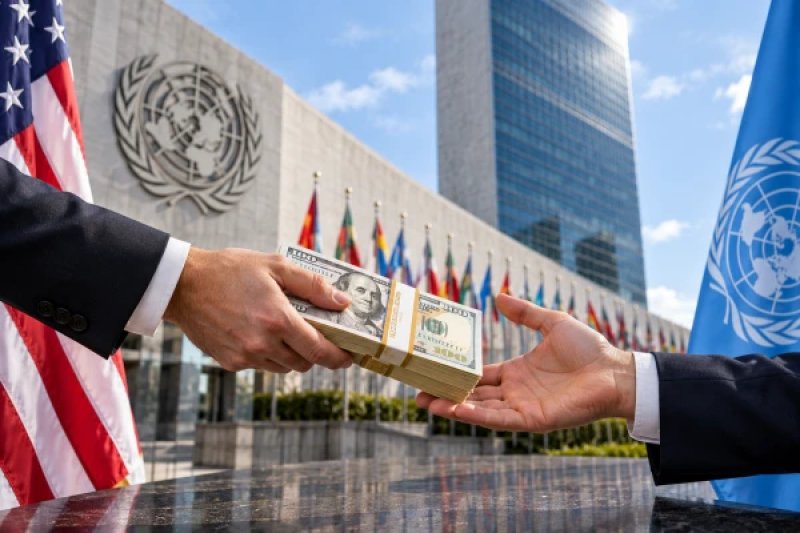
The administration of US President Donald Trump transferred $725 million to the UN to settle debts owed to the organization's regular budget, said UN spokesperson Farhan Haq. Additionally, just a few days earlier, Washington paid another $102 million for peacekeeping operations. Thus, the total amount of the recent transfers amounted to $827 million. The payments were made shortly before the next session of the UN General Assembly in New York. ### Why the US Could Lose Its Vote The reason lies in Article 19 of the UN Charter. It stipulates that a member state may lose its right to vote in the General Assembly if its arrears in contributions reach or exceed the amount of contributions owed for the previous two full years. An exception is possible if the General Assembly recognizes that the debt arose for reasons beyond the state's control. Due to accumulated debts, Washington was approaching this threshold. After the funds were received, the UN representative stated that the US is no longer at risk of invoking Article 19 in 2027. ### But the Debt Hasn't Disappeared The $725 million transferred only settled a portion of the American debt. According to the UN, after the payment, the US still owes about $1.312 billion to the organization's regular budget alone. Additionally, there is a separate debt for funding peacekeeping operations. Earlier in the spring, the UN estimated the total obligations of the US to the organization at over $4 billion, although Washington disputed part of this amount. The US remains the largest contributor to the UN's regular budget. China ranks second, having transferred $641.4 million to the organization on September 1. ### Trump Demands Reforms The Trump administration has repeatedly criticized the UN and reduced voluntary funding for several of its structures. US authorities have also linked further payments to reforms within the organization. For the UN itself, the influx of American funds is of great significance. The organization is experiencing a serious liquidity crisis and is implementing a large-scale cost-saving and reform program called UN80. Secretary-General António Guterres previously warned that chronic delays in contributions from states pose a threat to the normal functioning of the organization. This creates a paradoxical situation: Washington continues to demand that the UN cut expenses and reform, while simultaneously being forced to settle debts to avoid approaching the sanctions provided for in the organization's Charter.
