

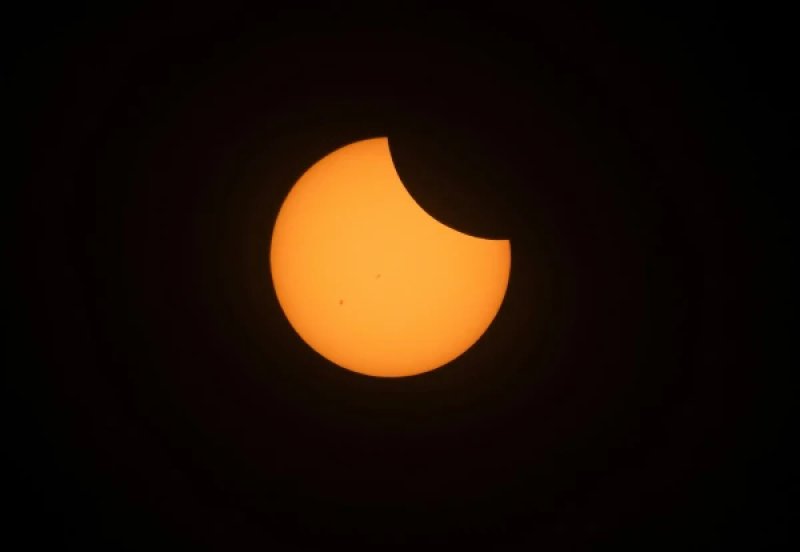
Less than a year remains until one of the most anticipated astronomical events of the decade. On August 2, 2027, the Moon will completely cover the Sun over parts of Europe, North Africa, and the Middle East. Due to the unusually long total phase, this eclipse has already received the unofficial title of 'eclipse of the century,' writes [Space](https://www.space.com/total-solar-eclipse-2027-everything-you-need-to-know-where-when-to-see). The maximum duration of the total phase will be 6 minutes and 23 seconds. This will be the longest total solar eclipse observable from land since 1991. A longer event will not occur until 2114. ## Where to see the total eclipse The path of the total phase, about 258 kilometers wide, will pass through several countries. The shadow of the Moon will cross southern Spain, northern Morocco, Algeria, and Tunisia, then move through Libya, Egypt, northeastern Sudan, Saudi Arabia, Yemen, and northeastern Somalia, before exiting into the Indian Ocean. In total, the path of the lunar shadow across the Earth's surface will take about 3 hours and 20 minutes. One of the best places for observation is Luxor in Egypt. It is near this city that the moment of maximum duration of the eclipse will occur. Additionally, the region has a very high probability of clear weather, which is especially important for astronomical observations. ## Why Luxor For many travelers, the trip to the eclipse will be an opportunity to combine a rare natural phenomenon with visits to the monuments of Ancient Egypt. Luxor is home to the famous Luxor and Karnak temples, the Avenue of Sphinxes, the Valley of the Kings, the Temple of Hatshepsut, and the Colossi of Memnon. However, observers will need to consider the climatic conditions. In early August, daytime temperatures here can reach 43 degrees, so tour organizers will likely choose locations near hotels and other places where people can shelter from the heat. ## Where the chances of seeing the eclipse are highest The main enemy of eclipse enthusiasts is traditionally cloud cover. That is why Egypt is considered one of the most attractive places for observation: the probability of clear skies here is extremely high. Popular destinations are also likely to include southern Spain, Gibraltar, northern Morocco, and special cruises that will allow viewing the eclipse from the sea. According to Timeanddate, about 88.9 million people will be in the path of totality. For comparison, the famous total solar eclipse in the U.S. in April 2024 was accessible to about three times fewer residents. ## What residents of Latvia will see There will be no completely covered Sun in Latvia, but residents of the country will be able to [observe](https://www.timeanddate.com/eclipse/in/latvia/riga?iso=20270802) a partial solar eclipse. In Riga, it will begin on August 2, 2027, at 11:39, the maximum phase will occur at 12:25, and the phenomenon will end at 13:10. The maximum magnitude of the eclipse will be 0.259, meaning the Moon will cover about a quarter of the solar disk. To observe even a partial eclipse, it is necessary to use special protective filters or glasses — looking at the Sun without them is dangerous for vision. ## What eclipses will follow After the event on August 2, 2027, total solar eclipses will occur: * July 22, 2028 — Australia, New Zealand, Christmas Island, and the Cocos Islands; * November 25, 2030 — Namibia, Botswana, South Africa, Lesotho, and Australia; * November 14, 2031 — predominantly over the Pacific Ocean; * March 30, 2033 — Russia and Alaska; * March 20, 2034 — Egypt, Saudi Arabia, India, China, and several countries in Africa and the Middle East; * September 2, 2035 — China, North Korea, and Japan; * July 13, 2037 — Australia and New Zealand. The total solar eclipse of 2027 will be one of the most significant astronomical events of the 21st century and is likely to attract millions of observers from around the world.
