

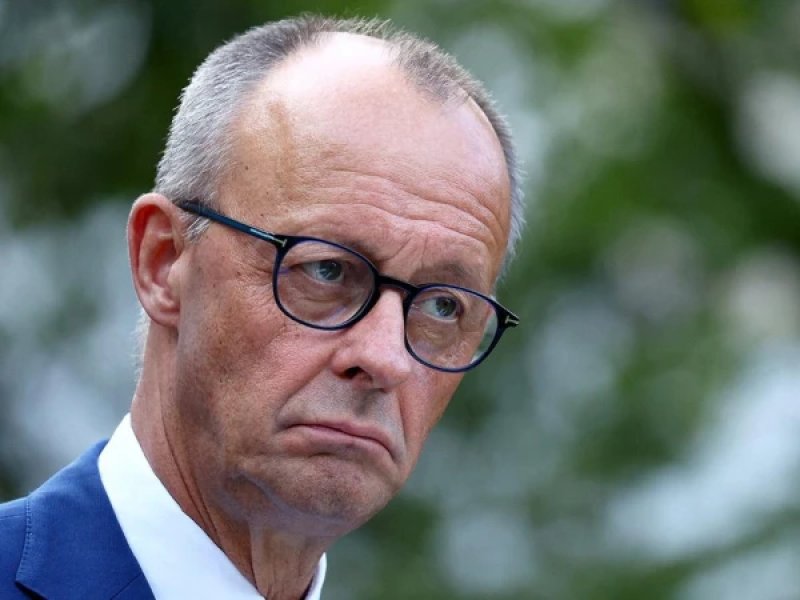
The time of 'unconditional transatlantic friendship' is likely to remain in the past for a long time, said German Chancellor Friedrich Merz while speaking at a campaign event for the Christian Democratic Union (CDU) in Berlin on Thursday, September 17. "We are witnessing a change in political approaches and assessments of the transatlantic alliance across the Atlantic that we may not have imagined," Merz's words were quoted by the dpa agency. This statement by the Chancellor of Germany came against the backdrop of deteriorating relations with U.S. President Donald Trump due to disagreements over the U.S. and Israel's war against Iran, as well as trade wars initiated by the White House, the agency noted. At the beginning of his second presidential term, Trump had a favorable view of Merz; however, after Merz refused to support the U.S. in the war with Iran, their relationship soured. Trump began to criticize the German authorities, including attributing false statements to Merz. Earlier in September, Trump congratulated the far-right party Alternative for Germany on its victory in the state elections in Saxony-Anhalt. This became yet another gesture of support from Washington for German right-wing populists, which had previously drawn criticism in Berlin. ## Merz Sees New Opportunities for Germany At the same time, the tension that has arisen in the relations between Europe, including Germany, and the U.S., according to the Chancellor, provides the country with new opportunities that should not be missed. Germany must seize the moment and take on more responsibility for its own security and development, Merz stated, pointing out that the federal government has significantly increased defense spending. Moreover, Merz sees signs of economic recovery in Germany after several years of stagnation. He noted that, according to forecasts, the country is expected to see economic growth of about 1.3 percent by the end of 2026. "We have come out of this valley of a shrinking or stagnating economy," the Chancellor stated in this regard, adding that the country still needs reforms. ## Merz and Trump Did Speak on the Phone Later that same day, a representative of the German government, Stefan Kornelius, stated that the Chancellor of Germany and the head of the White House had a phone conversation that had previously been postponed by Berlin. According to Kornelius, Merz discussed the topics of "next steps to end" the war of Russia against Ukraine with Trump, welcomed the U.S. Congress's adoption of a sanctions package against Russia initiated by Senator Lindsey Graham, and also discussed shipping issues in the Strait of Hormuz and the Red Sea caused by the war in Iran. The Chancellor also recalled the September 11, 2001 attacks, for which the phone conversation between the two leaders had been previously scheduled to coincide with the anniversary. However, a day before the planned event, Berlin postponed the conversation indefinitely without providing reasons. This was preceded by praise from Trump for the German far-right party Alternative for Germany, which won a convincing victory in the elections to the state parliament of Saxony-Anhalt. In Berlin, the statements from Trump were met with irritation. "Germans are capable of solving the migration issue themselves, as well as who we choose," stated the German government's coordinator for transatlantic cooperation, Metin Hakverdi. "We do not need advice from the White House on this matter," he emphasized.
