

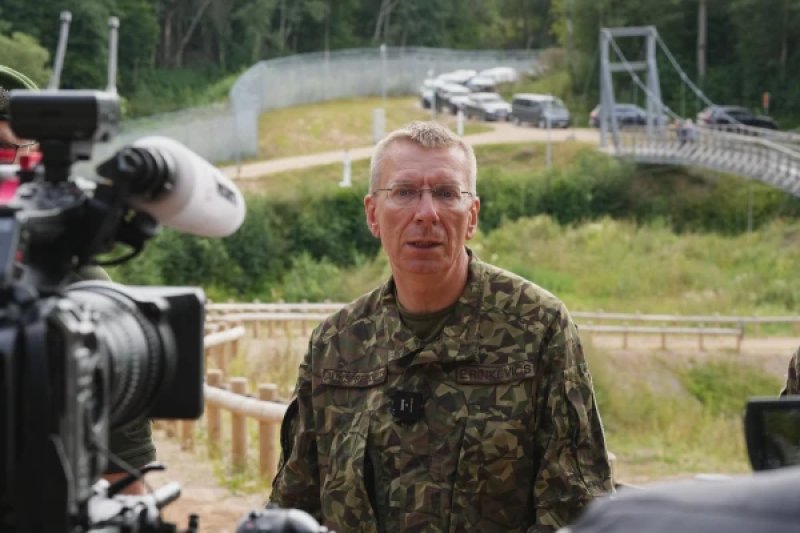
– The situation in the world, Europe, and our region is extremely tense. Russia's aggression against Ukraine and the hostilities in the Middle East continue to lead to political and military escalation, now compounded by rising energy prices and a deteriorating economic situation. This autumn and winter will be quite challenging, and both Latvia and Europe are preparing for it. In the public space, there are many different and often contradictory opinions about the worsening security situation on NATO's eastern flank and in Europe. The number of Russia-inspired acts of sabotage, espionage, and subversion against the infrastructure and enterprises of countries supporting Ukraine is already increasing (the incident with drones in Leipzig, the shelling of a train at the border of Ukraine and Poland, etc.). We are observing this in Latvia as well. Further escalation is highly likely. After the elections to the State Duma of Russia, mobilization will be carried out in one form or another, followed by further actions against Ukraine. Russia's goal is to use this winter to achieve successes in Ukraine, intimidate Ukraine's supporters, and weaken, ideally split, NATO and the EU. We are currently witnessing both real and information operations. Our security services and the security services of our allies are constantly cooperating, exchanging information, and there have already been several successful cases where actions of spies, saboteurs, and saboteurs were prevented or neutralized, or they were detained. Unfortunately, there is no hundred percent guarantee of preventing enemy actions, and there never will be. In this alarming time, I am guided by three principles: the analysis of facts, Russian rhetoric, and historical context. The facts currently indicate that a large-scale classic invasion of NATO/EU territory by Russia is impossible: there is no necessary concentration of forces for that. All other types of actions that I listed above have already increased and will occur even more frequently. Russian rhetoric and historical experience suggest that Russia will continue escalation. If allies do not stop it with clear actions, the risks and threats will become more serious. We must start by acknowledging that for a long time we made the mistake of calling sabotage, terrorist acts, subversion, etc., hybrid threats. This creates a sense of something rather harmless — somewhat like when talking about a hybrid car. We have already discussed this with colleagues from many countries. Such a change in doctrine will help mobilize support from allies. NATO has succeeded in strengthening the security of the Baltic Sea infrastructure and protecting airspace (Baltic Sentry and Eastern Sentry). Now it is necessary to work on creating another initiative — "guardians against threats" (draudu sardze). In the coming weeks, the biggest risks for Latvia will be related to the elections. These include cyberattacks, migration pressure at the border with Belarus, incidents with drones, information campaigns, etc. Therefore, we have requested an increase in the presence of NATO air patrol fighters, the Vilkatis operation has been extended, and the structures of internal affairs and security services are working intensively. The possibility of small Russian special forces units invading the territory of allied countries and subsequently paralyzing the mechanism of NATO Article 5 is often discussed. This scenario is also taken seriously. Both the Armed Forces of Latvia and the NATO units stationed here will offer decisive resistance, without waiting for discussions in Brussels. Relevant plans have already been developed, and the necessary authorities have been granted. This is a troubling time, the situation is changing rapidly, and the coming months will be difficult for our country, as well as for many others. Our defense and internal affairs systems are aware of the enormous responsibility and existing risks. They are doing everything possible to mitigate them. What can each of us do right now? The most immediate action is to participate in the elections, support the National Armed Forces and Zemessardze, report suspicious activities to law enforcement, and seek any opportunities and ideas that can make our Latvia stronger.
