

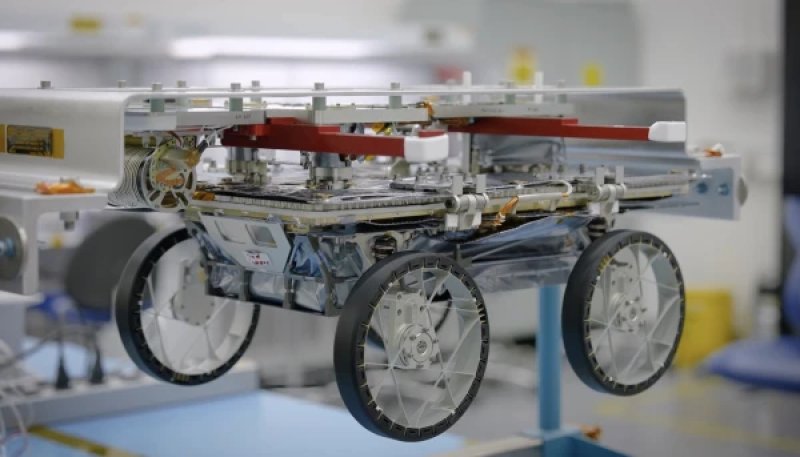
NASA is preparing to conduct one of the most unusual robotic missions in recent years. As part of the CADRE (Cooperative Autonomous Distributed Robotic Exploration) project, three autonomous rovers will be sent to the Moon for the first time, working as a unified team with minimal involvement from operators on Earth, writes [IFLScience](https://www.iflscience.com/for-the-first-time-nasa-is-putting-a-trio-of-autonomous-robots-on-the-moon-without-humans-calling-the-shots-84693). Each rover, roughly the size of a pet carrier, is equipped with solar panels, cameras, ground-penetrating radar, and an artificial intelligence system that allows it to navigate independently. After landing in the Reiner Gamma region, the robots will create a three-dimensional map of the surface and investigate what lies beneath the lunar soil. The main feature of the mission lies not in the rovers themselves, but in their operational principle. Instead of constant remote control, specialists will only set a general goal. > "The only command they receive is, for example: 'Explore this area.' Everything else the rovers decide for themselves: when to start moving, which route to take, and how to navigate around obstacles," said Jean-Pierre de la Croix, the CADRE mission lead from NASA's Jet Propulsion Laboratory. After receiving the task, one of the rovers automatically becomes the leader. It distributes the territory among the other robots, after which each selects a safe route, conducts imaging, and transmits the results to its "partners." The data is then combined into a single map of the explored area. ## Why this is not easy Autonomous operation on the Moon is significantly more complex than it may seem. Due to the lack of atmosphere, the equipment is exposed to harsh solar radiation, and surface temperatures can reach 114 degrees Celsius during the day. To avoid overheating, the rovers will operate in short cycles: performing tasks for about 30 minutes, then shutting down, cooling off, and recharging their batteries from solar panels. After that, they will continue their exploration. ## The next step after Perseverance The CADRE project is a continuation of technologies that NASA is already using on Mars. The Perseverance rover, which has been operating on the Red Planet since 2021, is already capable of autonomously covering most of its route. According to NASA engineer Mark Maimone, today more than 90% of all long-distance movements of the rover are performed without operator involvement. > "Autonomous control has become the primary means of conducting long trips," he noted. Now specialists want to test whether several robots can effectively interact with each other in the extreme conditions of the Moon. The CADRE mission is expected to last about 14 Earth days — the duration of one lunar day. During this time, the devices will conduct a series of experiments that will help determine how suitable such technologies are for future research programs. If the tests prove successful, similar groups of autonomous robots could prepare sites for building lunar bases, search for useful resources, and conduct reconnaissance even before astronauts arrive. The CADRE mission will be the first test in which a group of rovers will act as an independent team rather than as machines constantly controlled from Earth.
