

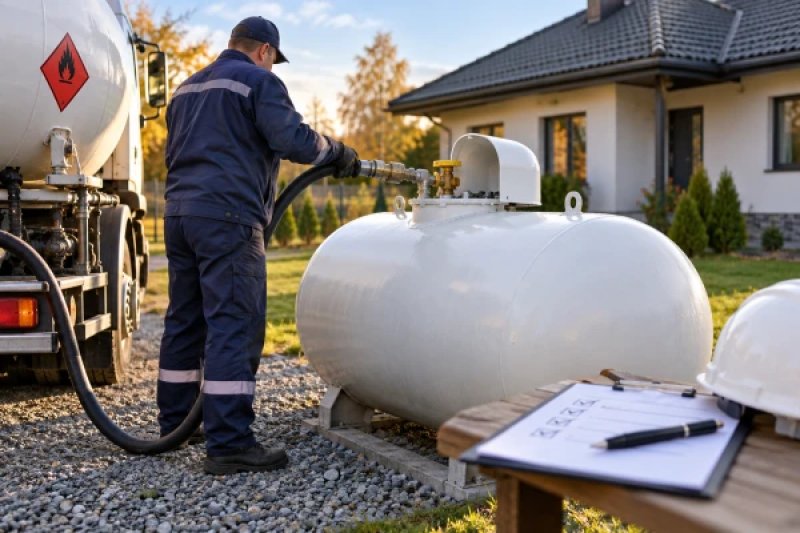
According to PTAC, stationary liquefied petroleum gas tanks are classified as hazardous equipment, and therefore, their operation is subject to special requirements. Owners are required to register the tank in the Register of Hazardous Equipment (BIR), ensure its safe operation, and timely conduct the technical inspections mandated by regulations. ### Once a Year and Once Every 12 Years An external technical inspection of the tank must be conducted **every 12 months**, while an internal or hydraulic inspection must be conducted **once every 12 years**. Before the inspection, additional preparation of the equipment may be necessary. For example, replacing the pressure gauge with a verified one or replacing the safety valve. PTAC emphasizes that only accredited inspection organizations are authorized to conduct technical inspections. Companies that service gas equipment under contract are not considered such organizations. ### Refueling May Be Denied at the Most Inopportune Moment Owners are advised to find out in advance the date of the next internal inspection. If the deadline has already passed and the tank remains filled with gas, it may be impossible to carry out the necessary work until it is properly prepared and emptied. This is especially true for underground tanks. **If the mandatory technical inspection has not been conducted or its validity period has expired, the tank will not be refueled with gas**, warns PTAC. ### What Needs to Be Checked Owners are also advised to check the Register of Hazardous Equipment to ensure that the tank is registered, the information about the equipment and its owner is current, and that the inspection organization has been granted the necessary access rights. In the register, one can find out the date of the next technical inspection and determine what type of inspection is upcoming — external, internal, or hydraulic. The responsibility for registering hazardous equipment and the accuracy of the necessary data in the register lies with the owner.
