

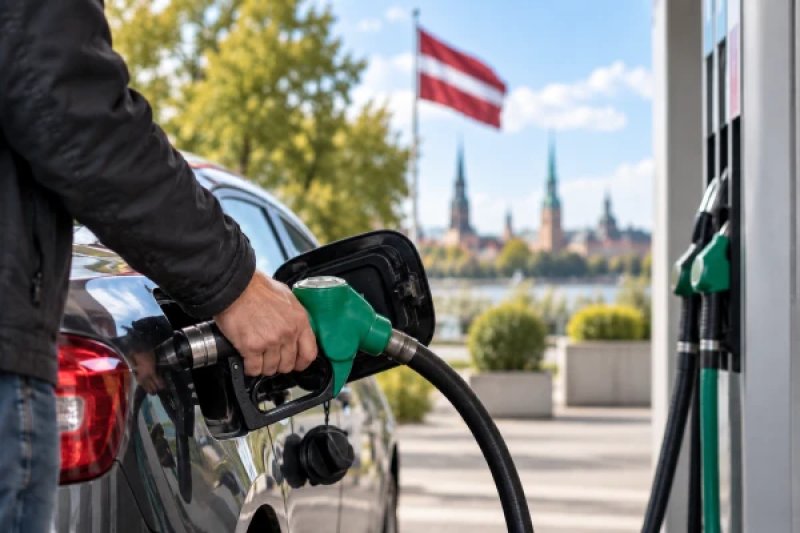
The Ministry of Economics of Latvia has named one of the fastest ways to lower prices at gas stations — to reduce the VAT on fuel from the current 21% to 12%. If the tax relief is fully reflected in retail prices, the price of diesel could decrease by approximately 16–17 cents per liter, and gasoline by 14–15 cents. These calculations are confirmed by the published position of the ministry. The Ministry of Economics believes that to combat high fuel prices, several tools should be used simultaneously. However, the reduction of VAT is considered one of the quickest options. According to the ministry's calculations, at the current price level, switching from 21% to 12% would allow for a reduction in the cost of diesel fuel by approximately **16–17 cents per liter**, and gasoline by **14–15 cents**. At the same time, the ministry emphasizes an important condition: the effect will depend on how fully the tax reduction is actually passed on to the final price at gas stations. ### Prices may also affect inflation The high cost of fuel increases expenses not only for motorists but also for transport, manufacturing, agriculture, logistics, and service industries. In August, the rise in fuel prices became one of the main factors contributing to the increase in consumer prices in Latvia. According to the Ministry of Economics, the full reflection of the VAT reduction in retail prices could reduce the overall level of consumer prices by approximately **0.3 percentage points**. The ministry intends to continue monitoring prices and believes that the government should consider the entire set of available measures — from taxes to mechanisms that would allow for real and timely price reductions directly at gas stations. ### Will the "solidarity tax" return? Another possible tool is the so-called solidarity payment for fuel traders. It was intended to be applied in situations where retail prices rise significantly more than can be explained by changes in global prices for petroleum products and the objective costs of companies. Previously, the government supported such a mechanism; however, the bill later did not receive support in the Saeima. The Ministry of Economics indicates that returning to this idea would require a new political decision and a repeated legal assessment. Official materials from the ministry also confirm that the previously developed mechanism was rejected by the parliamentary committee. ### The government wants to achieve a reduction by October 1 The Prime Minister previously stated that the coalition is considering several ways to reduce the prices of gasoline and diesel. Among them are reducing the excise tax to the minimum level allowed by EU rules, canceling expenses related to fuel reserve requirements, and changing requirements for biofuels. According to the Prime Minister, the cumulative effect of the proposed measures could amount to **up to 20 cents per liter**, and the government would like to achieve price reductions by **October 1**.
