

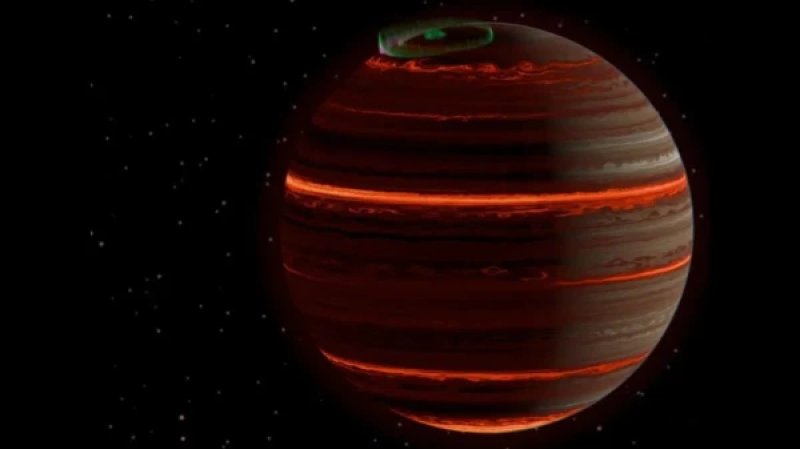
Scientists have taken another step toward one day learning to forecast weather on worlds beyond the Solar System. A new study based on observations from the James Webb Space Telescope (JWST) has shown that atmospheric processes on one of the closest brown dwarfs to Earth exhibit repeating patterns, writes [Space](https://www.space.com/astronomy/james-webb-space-telescope/the-james-webb-space-telescope-is-helping-astronomers-become-alien-weather-forecasters). The object SIMP 0136, located about 20 light-years from Earth, is not considered an exoplanet. It belongs to the class of brown dwarfs—celestial bodies that are more massive than planets but not large enough to sustain nuclear fusion like true stars. Such objects are particularly interesting to astronomers. Because they can be observed directly, they serve as natural laboratories for studying the atmospheres of giant worlds similar to exoplanets. ## Three Types of 'Weather' Researchers analyzed small changes in the brightness of SIMP 0136 that occur during its rotation. Using principal component analysis, they identified three recurring states of the atmosphere that alternated with each other. The analysis showed that hotter areas are covered by thin clouds, while colder regions have a denser cloud layer that rises higher into the atmosphere. ## Main Discovery The most significant result was not just the detection of different weather states but that they repeat. According to lead author Merle Schrader from Trinity College Dublin, the fundamental processes that define the object's atmosphere remain consistent even though the appearance of the clouds gradually changes. > "We found that the factors determining the weather conditions on SIMP 0136 persist over time, even with changes in the details of the atmosphere," noted the researcher. This means that atmospheric processes follow stable physical laws. ## Why This Matters Currently, astronomers cannot make forecasts like "tomorrow it will be cloudy on this planet." However, the new methodology allows for the rapid identification of the main processes occurring in the atmosphere, even before launching complex computer models. According to co-author Johanna Vos, applying this approach to other brown dwarfs and giant exoplanets will help better understand how diverse the weather can be on worlds beyond our Solar System. ## What This Changes Today, scientists are already able to detect clouds, measure temperature, and determine the chemical composition of the atmospheres of distant worlds. The new study brings us closer to the next stage—understanding how these atmospheres change over time. This is a necessary condition for creating the first weather forecasting models for exoplanets. Although true "alien weather forecasts" are still far off, observations from James Webb show that the atmospheres of distant worlds may be much more predictable than previously thought.
