

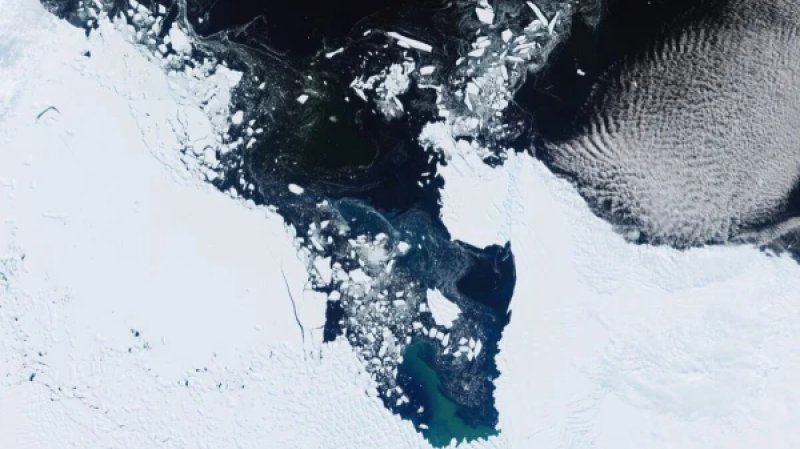
The two largest ice sheets on Earth have lost over 12 trillion tons of ice since 1979. This conclusion was reached by an international group of 58 scientists who combined data from nearly half a century of satellite observations. The results of the study were published in the journal [Scientific Data](https://www.nature.com/articles/s41597-026-08088-0). According to the authors' estimates, the disappearance of ice in Greenland and Antarctica has already raised global sea levels by approximately 31.4 millimeters. ## The Most Comprehensive Picture in Nearly Half a Century The researchers combined the results of 42 scientific studies based on data from 27 satellite missions. This allowed them to create one of the most comprehensive long-term datasets on the state of the two largest ice sheets on the planet. Satellite observations of Greenland have been ongoing since 1972, and for Antarctica since 1979. At the same time, the scientists only considered the loss of ice that directly affects sea level rise. The study did not include processes such as the thinning of ice shelves and some other changes that do not directly lead to an increase in ocean levels. ## The Main Reason — Ocean Warming The study showed that 84% of all lost ice mass is related not to surface melting but to the accelerated movement of glaciers at their contact points with the ocean. As explained by the lead author of the study, glaciologist Ines Otosaka from Northumbria University, the main role is played by changes in glacier dynamics. > "More than four-fifths of the lost ice was dumped into the ocean by accelerating glaciers rather than melted at the surface. This indicates that the long-term trend is driven by the dynamic response of ice sheets to ocean warming," she noted. The remaining 16% of losses are associated with atmospheric processes, including surface melting and changes in snowfall amounts. ## What Is Happening at the Poles As greenhouse gases accumulate, the global ocean absorbs much of the additional heat, causing the water to gradually become warmer. In Greenland, this process is accompanied by what is known as Atlantification — the penetration of warmer waters from the Atlantic Ocean far to the north. In Antarctica, circumpolar currents are intensifying, bringing warm water under the glaciers from below, accelerating their destruction. According to scientists, these processes have noticeably intensified since the 1990s and currently show no signs of long-term slowing. ## Why It Seemed That the Situation Improved Data from 2020 to 2023 may have created the impression that ice loss in Antarctica had stabilized. However, as Ines Otosaka explained, the reason was unusually strong snowfall in East Antarctica, which temporarily compensated for some of the losses. According to her, newer, yet-to-be-published measurements show that the acceleration of glacier retreat is continuing again. ## Why This Matters The ice sheets of Greenland and Antarctica contain the majority of Earth's freshwater. The rate of their destruction directly impacts long-term sea level rise, which in turn affects coastal cities, infrastructure, and ecosystems worldwide. Diego Fernandez, a representative of the European Space Agency, noted that such studies are made possible through international cooperation and allow for more accurate predictions of future climate changes. New satellite data show that the destruction of the largest glaciers on Earth continues, and understanding these processes is key to predicting future sea level rise.
