

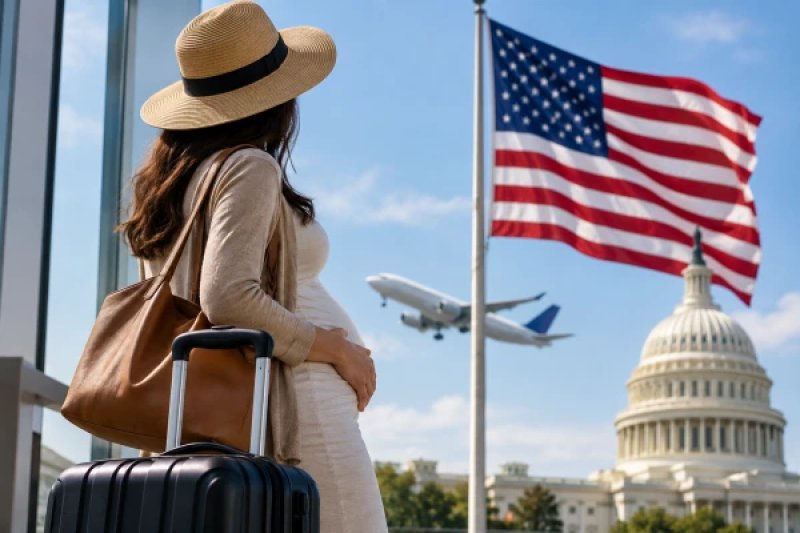
On September 23, U.S. Secretary of State Marco Rubio announced the introduction of a new policy. According to the official statement from the U.S. Department of State, the restrictions are being implemented under Section 212(a)(3)(C) of the Immigration and Nationality Act and apply to individuals who knowingly participate or have participated in organizing commercial 'birth tourism.' In particular, this concerns the owners and managers of companies organizing such trips, visa intermediaries who instruct clients to provide false information when applying for documents, as well as foreign medical institutions and specialists who knowingly assist in organizing such trips. In some cases, the restrictions may also extend to the family members of such individuals, the State Department clarifies. According to Rubio, commercial networks have turned the acquisition of U.S. citizenship for children into a profitable business. U.S. authorities claim that organizers teach clients to conceal the true purpose of their trip and charge tens of thousands of dollars for arranging births in the U.S. The introduction of the restrictions was also reported by DPA and several American media outlets. The new measures are a continuation of the White House's campaign against 'birth tourism.' On August 6, Trump signed a special order directing the State Department and the Department of Homeland Security to take action against foreigners entering the country on non-immigrant visas for the purpose of giving birth in the U.S. The document allows for denial of entry, visa cancellation, and other measures against both the participants of such schemes and their organizers. Additionally, in August, the U.S. Department of State established a special task force to combat 'birth tourism.' Its task is to identify relevant cases worldwide, seek visa cancellations, and identify organizations profiting from such services. Moreover, a trip to the U.S. primarily for the purpose of giving birth and obtaining U.S. citizenship for the child is no longer considered a valid basis for issuing a standard visitor visa. This is explicitly stated in the current guidelines from the State Department for applicants. The timing of the announcement has drawn additional attention to Washington's decision. The South China Morning Post notes that the new restrictions were presented just hours before the arrival of Chinese President Xi Jinping in the U.S. In recent years, U.S. authorities have paid particular attention to companies organizing such trips from China, although the policy announced by Rubio is not limited to citizens of any one country. Thus, Washington is shifting from restrictions directly targeting those coming to give birth in the U.S. to broader pressure on the entire 'birth tourism' infrastructure—from visa intermediaries to foreign medical organizations. The new policy allows U.S. authorities to deny entry to foreigners they consider participants or organizers of such commercial schemes.
