

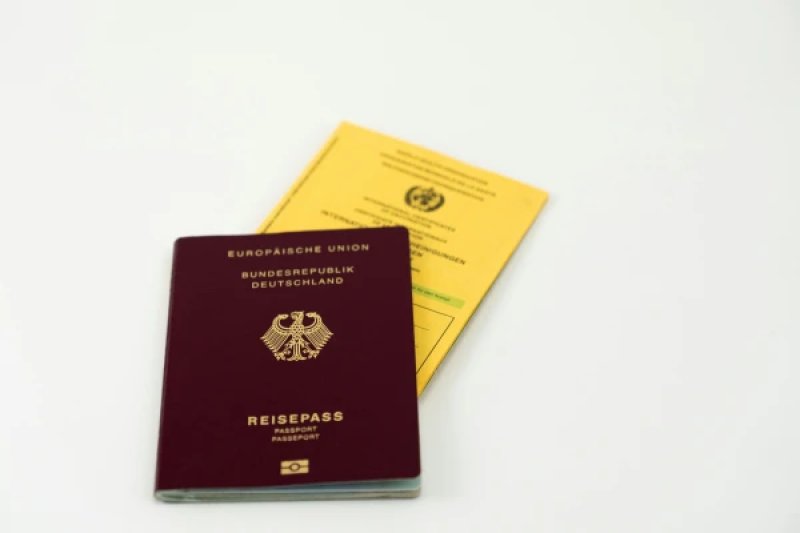
 Foto: BB.LV / паспорт Германии
A new trend is gaining popularity on social media platforms like TikTok, Reddit, and travel forums: travelers are wrapping their passports in aluminum foil, hoping to protect their personal data from potential remote scanning, reports [tv3.lv](https://tv3.lv/zinas/arvalstis/savads-trends-rada-rindas-lidostas-celotaji-aptin-pases-folija/). According to Euronews, this practice is particularly common among holders of new German passports equipped with RFID chips. The Federal Office for Information Security in Germany states that the electronic chip is designed to speed up and enhance the security of passport control. It stores the owner's digital photograph, personal data, and fingerprints necessary for identity verification. Tourists' concerns stem from the belief that criminals could allegedly read this data unnoticed simply by being near the passport holder. However, experts consider such a scenario highly unlikely. To read the information, the device must be almost in close proximity to the document — following the same principle as contactless bank cards and payment terminals. Although aluminum foil can indeed shield radio signals, experts do not deem such a protective measure necessary in everyday situations. Moreover, the constant need to unwrap and rewrap the passport during security checks only increases the time taken for document verification and contributes to the formation of lines at airports. Experts also remind that the data of electronic passports is protected by several layers of security. In Germany, for example, there is no centralized database containing information from the RFID chips of passports. Government authorities only store information that existed before the advent of electronic documents. Fingerprints are stored exclusively on the chip of the document after the passport is issued. According to German law, all biometric data used during the application process is deleted from government systems after the passport is handed over to the owner.
