

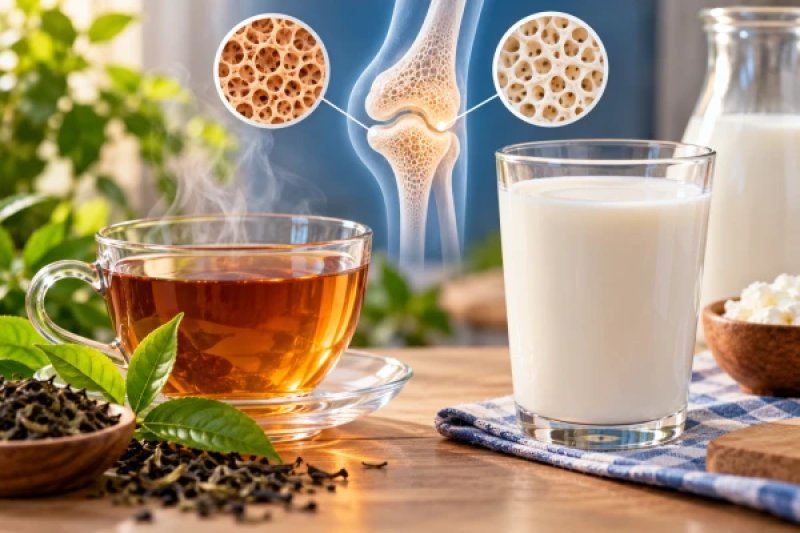
As [noted](https://www.verywellhealth.com/tea-vs-milk-for-bone-health-12076699) by Verywell Health, there is no clear winner in the debate between tea and milk. Milk provides the body with the substances necessary for bone tissue formation, while tea may help protect it due to the antioxidants it contains. ## Benefits of Tea Tea contains polyphenols and other antioxidants that can counteract oxidative stress and inflammatory processes. An excess of free radicals can damage cells, including those involved in the renewal of bone tissue. Antioxidants help neutralize these compounds and can thus maintain a balance between the formation of new bone tissue and the destruction of old. Studies referenced by the publication show that people who regularly consume tea often have higher bone mineral density. Tea drinkers may also have a lower risk of osteoporosis and fractures, especially among older adults and women after menopause. However, tea has a significant limitation: it does not provide the body with calcium and vitamin D—substances that are directly necessary for building bones. ## Benefits of Milk Milk acts differently. It is a source of several important nutrients for the skeletal system—**calcium, protein, and phosphorus**—and fortified milk also contains vitamin D. Calcium is necessary for forming bone structure, vitamin D helps the body absorb calcium, and protein is involved in maintaining bone tissue. Analysis of several studies has shown that adding milk to the diet of adults is associated with a slight increase in bone density, particularly in the hip and lower spine areas—regions that often become more vulnerable with age. However, more milk does not automatically mean protection against fractures. Studies have not shown that its consumption increases bone density throughout the entire body. ## So, What Should You Choose? Experts believe that it is not worth pitting these beverages against each other. **Milk provides the body with "building materials" for bones, while tea, thanks to its antioxidants, potentially helps protect existing bone tissue.** At the same time, neither drink alone can guarantee protection against osteoporosis. Maintaining bone health is important for overall lifestyle: adequate amounts of calcium and vitamin D in the diet, protein, normal body weight, and regular physical activity, especially walking, running, and strength training. It is also recommended to avoid smoking and limit alcohol consumption. Choosing between tea and milk for bone health is not necessary. Milk primarily helps provide the body with calcium, protein, and other essential substances, while tea can additionally protect bone tissue due to its antioxidants. Therefore, both beverages can be part of a diet beneficial for bones, but neither replaces a balanced diet and physical activity.
