

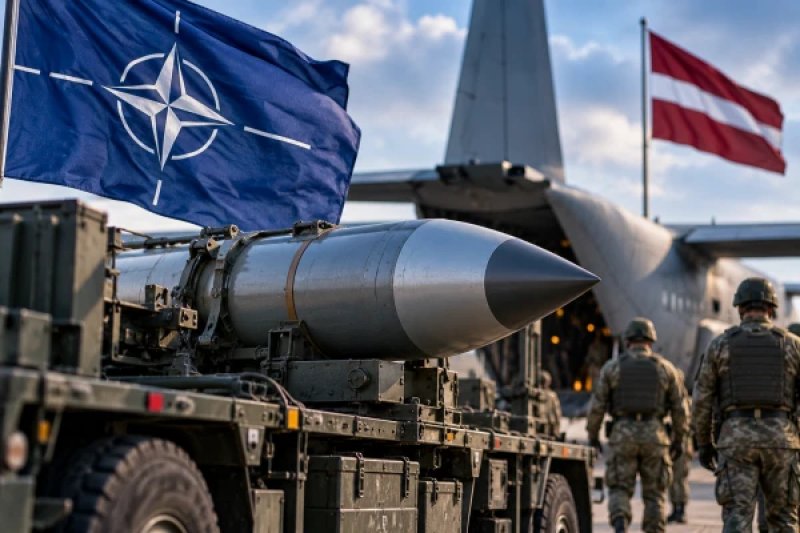
At the same time, the head of state emphasized that there are currently no specific negotiations regarding the deployment of nuclear weapons in Latvia. The statement came amid discussions about nuclear deterrence in the Baltic states. In September, the Lithuanian Seimas supported in the first reading the repeal of the constitutional ban on the deployment of nuclear weapons in the country. ### There Is No Legal Ban in Latvia Rinkēvičs pointed out that there is no such restriction in the Constitution of Latvia. "We have no legally established obstacles to the deployment of nuclear weapons in Latvia," the president stated. He reminded that back in 2003, when Latvia was preparing to join NATO, countries had to confirm the absence of restrictions that would hinder full participation in the alliance's collective security mechanism, including the nuclear deterrence system. According to the president, if such a necessity arises and NATO collectively makes the corresponding decision, nuclear weapons could be deployed in Latvia. ### Latvia Is Already Under a 'Nuclear Umbrella' Rinkēvičs also commented on the United Kingdom's proposal to extend additional guarantees of nuclear protection to the Joint Expeditionary Force (JEF) countries, which include the Baltic states and Northern Europe, as well as the Netherlands. In the president's opinion, nuclear deterrence remains one of the factors preventing conflicts in Europe from escalating into large-scale wars. The use of such weapons is a last resort; however, their mere existence should deter potential aggressors. The United Kingdom is already participating in NATO's nuclear deterrence system, so Latvia is currently under the alliance's nuclear umbrella, primarily provided by the USA and the UK. NATO officially defines nuclear forces as one of the key components of the overall deterrence and defense system of the alliance, alongside conventional weapons and missile defense. ### British Submarines and the Defense of Northern Europe Earlier, the commander of the Royal Navy of the United Kingdom, Admiral Gwyn Jenkins, during a visit to Finland, confirmed London's readiness to ensure nuclear deterrence within the framework of JEF cooperation. In November, an agreement is expected to be signed to create a new type of combat structure within JEF. It is anticipated that it will have wartime action plans and be able to respond quickly in the event of a Russian threat. The JEF includes ten countries: the United Kingdom, Latvia, Lithuania, Estonia, Denmark, Iceland, the Netherlands, Norway, Finland, and Sweden. At the same time, Rinkēvičs's statement does not mean that a decision has been made to deploy nuclear weapons in Latvia. The president speaks of the legal and political possibility of such a step in the future — if necessary and with a collective NATO decision.
