

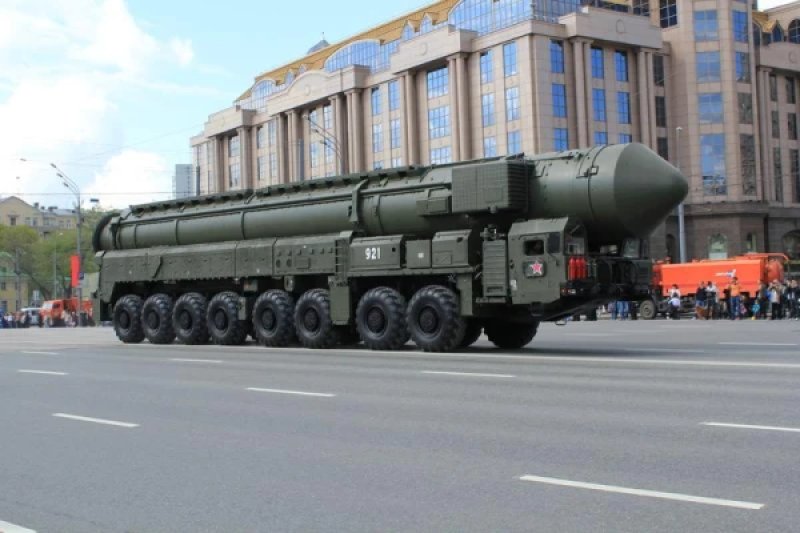
"Russia will be ready to use its entire arsenal of weapons, including nuclear weapons, to protect its territory if NATO countries attempt to isolate the Kaliningrad region from the rest of the country," such a statement was published on the website of the Russian embassy in Ireland on Tuesday, September 29. It largely echoes a statement released by the Russian embassy in Belgium the day before, on September 28. In both cases, Moscow firmly denies claims that Russia is allegedly preparing for military invasion of one or several European countries and is intensifying its hybrid attacks. The purpose of such statements about the 'Russian threat' is to justify the increase in defense spending, the 'widespread militarization of Europe,' and the continuation of financial, military, and political assistance to Ukraine, the Kremlin believes. Meanwhile, Russia has 'no plans, no reasons, and, most importantly, no real motives for escalating relations with Europe,' the document released by the Russian embassy in Ireland states. ## ## Russia sees a 'real threat' to its security from the West At the same time, Moscow claims that there is a 'real threat' to Russia's national security coming from the West. To support this thesis, it points to the increased military activity of NATO 'along the entire western border of Russia,' as well as the joining of several countries to the initiative of French President Emmanuel Macron, which allows the deployment of French nuclear weapons on the territory of participating countries - 'that is, at Russia's doorstep.' Regarding the 'threat' to the Kaliningrad region from NATO, as perceived by Moscow, the Russian embassy in Ireland mentions the Lithuanian-Polish-French military exercises 'Gallant Boar 2026,' which took place in June 2026. According to the Lithuanian Armed Forces, the purpose of these maneuvers was to practice skills for the rapid and effective defense of the Suwalki Corridor - a territory on the border between Lithuania and Poland that connects the Baltic states with the rest of the EU. However, Russia believes that the exercises were 'targeted at the Russian exclave - the Kaliningrad region.' ## ## NATO's response to Russia's accusations On September 29, NATO spokesperson Allison Hart provided DW with a comment from the alliance regarding the accusations made by Russia. NATO is an 'exclusively defensive alliance,' and none of its actions 'pose a risk to any part of Russia,' the press secretary emphasized. 'We strongly condemn the threat of the use of force, including any irresponsible nuclear rhetoric,' her written comment states. 'We call on Russia to end its unprovoked war in Ukraine.' 'Russia's use of hybrid tactics is a sign of desperation. But this will not make us abandon our support for Ukraine. We have everything we need to defend every inch of NATO countries' territory and remain strong, ready, and able to counter any threat,' Hart added. Meanwhile, NATO Secretary General Mark Rutte, speaking to reporters on September 29 in Brussels, stated that 'Russia continues its reckless campaign of hostile actions against NATO.' 'It (Russia - Ed.) is trying to weaken our resolve and stop our support for Ukraine. But it will not succeed,' Rutte emphasized. According to the NATO Secretary General, the organization intends to 'do more for Ukraine, not less.'
