

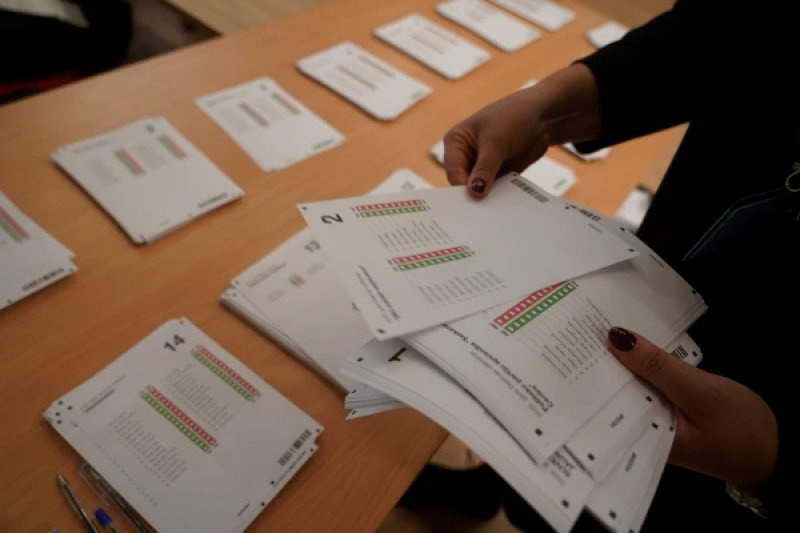
After the voting ended, users on the social network Threads began discussing whether elections could be made more environmentally friendly through digital technologies, writes [LA.lv](https://www.la.lv/es-vel-aizvien-nesaprotu-cilvekiem-luzt-sirds-redzot-cik-daudz-papira-tiek-izmests-velesanu-iecirknu-miskastes). The discussion was sparked by photographs of a large number of used ballots and other paper products that ended up in trash containers at polling stations after the voting concluded. User Elina questioned why some procedures cannot still be transferred to an electronic format. > "I still don’t understand why a more environmentally friendly election system hasn’t been devised. So much unnecessary paper and pointless fuel consumption, when all of this could have been organized digitally. Of course, there are people who do not use the internet, but if you think about it, a solution could be found," she wrote. However, many participants in the discussion opposed the transition to electronic voting. User Alise believes that in the current situation, security issues should remain a priority. > "In the context of the modern hybrid war — it is absolutely impossible and unnecessary," she wrote. Other participants noted that technically electronic voting is feasible, but the main condition is a high level of public trust in such a system. > "Technically it is possible, but dangerous. First, trust must be earned. There are no grounds to believe that it will be possible to implement an effective and ultra-secure election system if it does not fundamentally differ from other state IT systems," one comment stated. During the discussion, it was also mentioned that paper voting remains the primary method of conducting elections in many countries, as it is considered reliable and allows for manual verification of results if necessary. Another participant in the discussion, Aija, noted that electronic systems can create additional risks. > "I read an article that said it is very easy to interfere with electronic elections in a way that no one notices," she wrote. The discussion showed that issues of ecology, convenience, and the security of electronic voting continue to provoke differing opinions, and there is no unified view among users on a possible transition to digital elections.
