

 Foto: BB.LV / Кибервлияние в Балтии
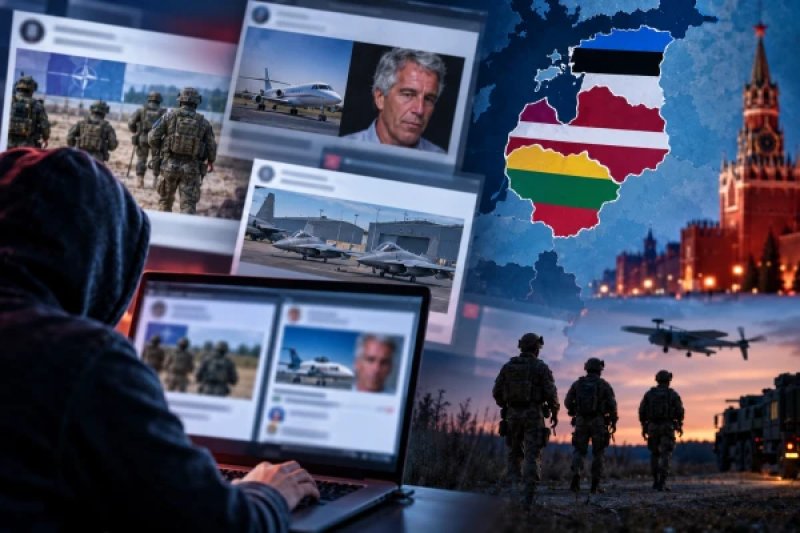
Researchers believe these stories are part of a Russia-linked information campaign aimed at sowing doubts about the reliability of NATO, Ukraine, and the security systems of the Baltic states. Euronews reported on the results of a new study by the London-based company Refute on October 6. According to the researchers, the campaign organizers focused not so much on supporting or discrediting individual candidates but on the most painful topics for the region's residents — Russia's war against Ukraine, border security, NATO, and drones. One of the most notable fakes was directly related to Latvia. A video styled as a Euronews report appeared online. It claimed that a Ukrainian soldier shot three NATO servicemen during the Baltic Trust 26 exercises taking place in Latvia and then committed suicide. No such tragedy occurred. The National Armed Forces of Latvia called the information a coordinated disinformation campaign, and Euronews separately confirmed that it did not create or publish this video report. However, by the time the refutation was issued, the story had already spread widely. According to Refute, it was disseminated from August 14 to September 6 by dozens of accounts with a combined audience of over 1.85 million people. To lend credibility to the fabrication, a real event — the Baltic Trust 26 exercises — was used. Their planned conclusion was attempted to be presented as a sudden cessation of maneuvers following the alleged murder. Another information operation targeted the leadership of the Baltic states. A fictional publication appeared on a website that outwardly imitated the well-known Brussels publication EUobserver, linking Estonian President Alar Karis and Lithuanian President Gitanas Nausėda to Jeffrey Epstein's network. To make the forgery appear more convincing, the creators of the resource copied real articles and biographies of EUobserver journalists. The fabricated story was then promoted using a video with voiceover created with artificial intelligence and more than a dozen social media accounts. Their total audience was estimated at around 780,000 people. The third story revolved around one of the most sensitive topics for Estonia — airspace defense. A fake website that copied the American military publication The Defense Post claimed that a Ukrainian drone had penetrated Estonian airspace and damaged two Portuguese F-16 fighters near the Ämari airbase. The alleged damage was estimated by the authors of the fake to be around 120 million euros. To create a convincing legend, real events — instances of drones appearing in the airspace of the Baltic states — were again used. But they were supplemented with a completely fabricated story about damaged NATO aircraft. Researchers note another feature of the operation: the same fake was not just translated into different languages but was adapted for specific audiences. Refute discovered eight versions of one of the videos, including versions for Spanish-speaking and Arabic-speaking users and variations with footage created by artificial intelligence. Previously, the Digital Forensic Research Lab (DFRLab) linked similar operations against the Baltic states to the Storm-1516 campaign. Researchers found the dissemination of such materials in English, Russian, Spanish, Italian, French, German, and other languages. Some of the accounts involved had previously been used in information operations related to elections in Moldova and Armenia. According to researchers, the strategy relied on the accumulation effect: a multitude of seemingly plausible stories was meant to create a sense among the audience that the security of the Baltic states was constantly failing — Ukrainian military allegedly killing NATO soldiers, Ukrainian drones destroying Western equipment, and the political leadership of the region being embroiled in high-profile international scandals. The fact of the fake video featuring 'three dead NATO soldiers' is further confirmed by a separate check by Euronews on September 7: the editorial team established that no such incident occurred, and the video merely imitated the channel's signature style. Thus, the main target of the attack was not individual politicians but trust — in NATO, Ukraine, state institutions, and the ability of Latvia, Estonia, and Lithuania to ensure their own security.
