

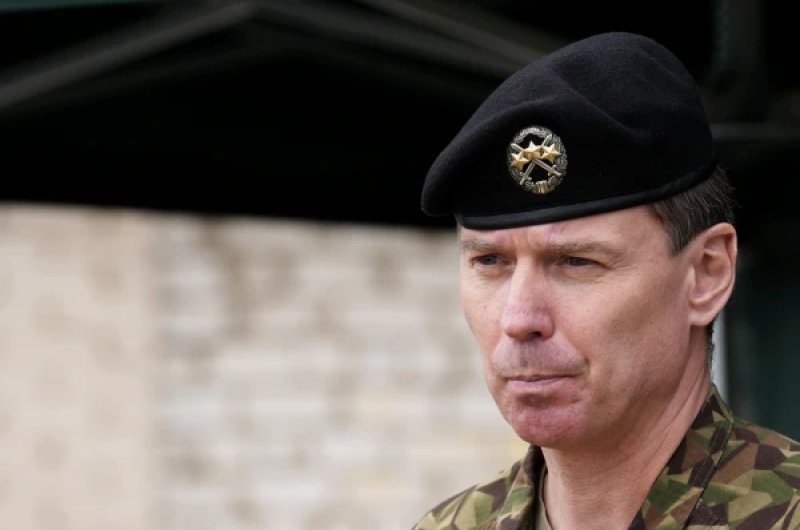
The Commander of the National Armed Forces, Kaspars Pūce, critically assesses the pace of achieving the goals of Operation 'Werewolf' (Vilkatis), which is being conducted on Latvia's eastern border, reports LETA. In an interview with TV3, Pūce stated that he initially perceived the operation as a short-term project. Its ultimate goal was to nearly completely halt illegal migration; however, 'Werewolf' has been ongoing for several months. At the same time, the commander acknowledges that the operation is yielding results: Latvian services are managing to contain a significant flow of people attempting to cross the border illegally. Pūce sees the problem differently — the army is still largely engaged in the same activities it has been for the past few years: patrolling the border and directly preventing its illegal crossing. In his opinion, to achieve long-term results, there needs to be a more active fight against the criminal networks organizing the transportation of migrants, as well as cooperation with the countries from which these people are arriving. In other words, merely increasing military presence at the border is insufficient if the system organizing illegal migration remains intact. Pūce believes that 'Werewolf' should not turn into a permanent set of measures without noticeable progress towards the original goal. If there is no advancement, plans need to be revised, emphasized the Commander of the National Armed Forces. Separately, Pūce commented on the incident at the border earlier this week, when migrant traffickers threatened Latvian soldiers. The military was pelted with stones and sticks, and individuals on the other side of the border were seen with an object resembling a weapon. Latvian soldiers decided to retreat, which Pūce called the right decision. As a result, a group of migrants returned to Belarus, and there was no breach of Latvia's territory. Military personnel have the right to use weapons for self-defense and protection of facilities. However, the possibility of opening fire across the state border is not currently being considered, as it could lead to an escalation of the situation, Pūce explained. Against the backdrop of ongoing pressure, the operation will continue. On October 6, the government extended 'Werewolf' until the end of the year after the number of attempts to illegally cross the border had increased again over the previous two weeks. In the interview, the Commander of the National Armed Forces also assessed the results of the large-scale military exercises 'Namejs' as quite successful, although he noted the need to improve the mobilization system for former professional military personnel who have been discharged. Pūce also touched upon the recent elections to the Saeima. No specific signs of potential threats were recorded during this period, although the overall situation required heightened readiness. According to the commander, it is impossible to determine whether the calmness was related to the absence of intervention plans or if the measures taken to deter played a role. Thus, the military presence at the eastern border will remain at least until the end of the year. At the same time, the leadership of the National Armed Forces considers it necessary to seek ways to influence not only the flow of migrants itself but also the mechanisms that facilitate it.
