

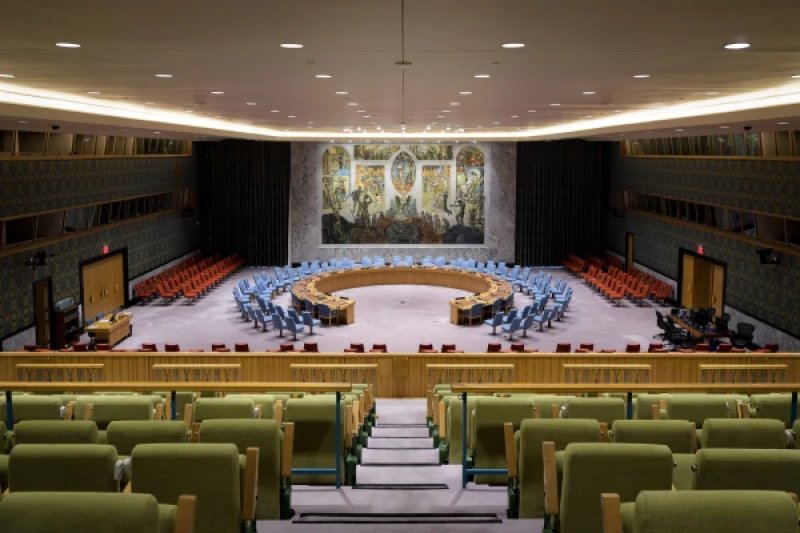
In more than 80 years of the UN's existence, the position of Secretary-General has never been held by a woman. Latvia considers the current elections an opportunity to change this tradition, stated the country's Permanent Representative to the UN, Sanita Pavļuta-Deslandes. As reported by LETA, the press secretary of the Permanent Mission of Latvia to the UN in New York, Signe Znotiņa-Znota, on October 7, the Security Council held its fifth indicative vote on candidates. Such votes are unofficial and allow for determining the level of support for candidates within the Security Council. They do not automatically exclude candidates from further contention, and the results remain confidential. The Security Council plays a key role in selecting the new head of the UN. The Secretary-General is formally appointed by the General Assembly, but does so on the recommendation of the Security Council. For Latvia, the current elections hold special significance: the country is a member of the Security Council and directly participates in the process of determining the candidate who will subsequently be recommended to the General Assembly. According to Pavļuta-Deslandes, the future Secretary-General must possess strong leadership qualities, be capable of reforming the UN, and take a principled stance on issues of international law and adherence to the organization's Charter, including the territorial integrity of states. Latvia also considers it important that the new leader can strengthen multilateral cooperation, restore trust in the UN, and ensure its ability to act in the current geopolitical situation. At the same time, Riga advocates for the most open and fair selection process. According to Pavļuta-Deslandes, Latvia has succeeded in establishing unified rules for candidates: each candidate must participate in unofficial dialogues in the General Assembly and official dialogues in the Security Council. Currently, seven individuals remain in the race for the position, four of whom are women. These include the Director General of the International Atomic Energy Agency, Rafael Mariano Grossi; the Secretary-General of the UN Conference on Trade and Development, Rebeca Grynspan; the former President of Senegal, Macky Sall; the former President of the UN General Assembly, María Fernanda Espinosa; the Permanent Representative of Guyana to the UN, Carolyn Rodrigues-Birkett; the former Minister of Foreign Affairs of Uganda, Olara Otunnu; and the former Ambassador of Ecuador, Ivonne Baki. The former President of Chile and former UN High Commissioner for Human Rights, Michelle Bachelet, withdrew her candidacy on September 21. However, the list is not final. There is no strict deadline for nominating candidates, so new candidates may emerge in the race for the position of UN Secretary-General. The final decision will largely depend on whether one of the candidates can gain the necessary support in the Security Council. For Latvia, the current process has simultaneously become an opportunity to advocate for greater transparency in the elections and to see a woman at the helm of the UN for the first time.
